Get Full Government Meeting Transcripts, Videos, & Alerts Forever!
Get email alerts on the Land Use topic
No spam. Unsubscribe anytime.
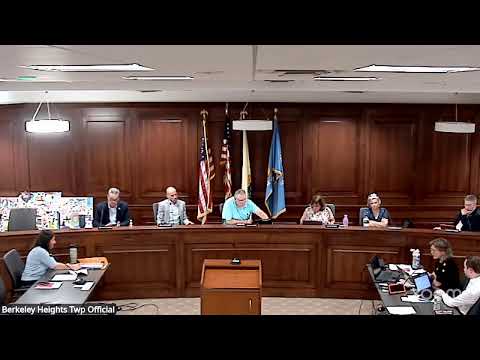
Berkeley Heights council bans data centers as permitted use, amends accessory‑use rules and introduces police staffing plan
Summary
The Township Council adopted an ordinance declaring data centers a prohibited use in all zones, approved clarifying amendments to accessory‑use rules and moved forward on road and sewer funding and a police staffing ordinance to be considered at first reading.
The Berkeley Heights Township Council voted July 21 to ban data centers as a permitted use across all zoning districts, adopting Ordinance 2026‑13 after an extended public hearing dominated by residents’ testimony for and against the measure.
Supporters of the ban told council members the ordinance is a precaution to protect public health, the township’s electrical grid and neighborhood quality of life, and noted that the provision can be amended if future conditions change. “By banning it now, it ensures that a developer has to start building and either then have standing to sue,” said a resident who urged the council to act promptly. Opponents urged study, site‑by‑site analysis and negotiation, saying a blanket ban would remove the township’s bargaining power to secure environmental and community protections or tax benefits.
Why it matters: The vote removes data centers from the list of permitted uses and requires any developer seeking one to come back to the township for special approval. Council members said the ordinance is intended to protect densely populated residential areas in Berkeley Heights and to require any prospective operator to demonstrate it will not harm residents or infrastructure.
Votes at a glance: Council recorded roll call votes to adopt several ordinances. Ordinance 2026‑16 (clarifying permitted and accessory uses) was amended and adopted; Ordinance 2026‑13 (data centers prohibited) was adopted by roll call; Ordinance 2026‑17 ($135,000 appropriation for road capital improvements) was adopted. Ordinance 2026‑18 (bond ordinance for sewer improvements, $2,505,000) was introduced and set for public hearing Aug. 11, 2026. Ordinance 2026‑19 (creating a deputy chief position, adding a lieutenant and four patrol officers) was introduced on first reading and set for public hearing Aug. 11, 2026.
Council comments and next steps: Council members repeatedly said they had considered input from the township planner and the public and that the ordinance framework allows council to require developers to return to the township with proof that proposals will not harm residents. Several members emphasized the ordinance can be changed later, and that permitting pathways still exist via variance or other applications if a developer makes a case to the township.
Chief’s plan and budget caveat: Police Chief (identified in the meeting) described a multi‑year staffing vision that would add roles as needs and budgets allow; council members and several residents pressed for operational data — call volumes, overtime history and a cost analysis — before authorizing new funded hires. The council emphasized that creating positions by ordinance does not immediately commit funds: any hiring would require budget approval in a later cycle.
What happens next: The bond ordinance for sewer work and the police staffing ordinance were introduced and scheduled for public hearings on Aug. 11, 2026. The council said staff will post the adopted ordinances and supporting documentation to the township website and that residents may return during those hearings to comment further.
Sources: Public hearing testimony and council roll calls at the July 21 council meeting, as recorded by the clerk and transcribed by the township.