Get Full Government Meeting Transcripts, Videos, & Alerts Forever!
Get email alerts on the Open Meetings topic
No spam. Unsubscribe anytime.
Ellsworth City training stresses Kansas open-meetings rules, executive-session limits and email-records advice
Summary
At a special Ellsworth City training, presenters reviewed the Kansas Open Meetings Act, executive-session exceptions, and the Kansas Open Records Act, advising officials that social-media exchanges and emailed deliberations can create prohibited private meetings and urging use of city email accounts for official business.
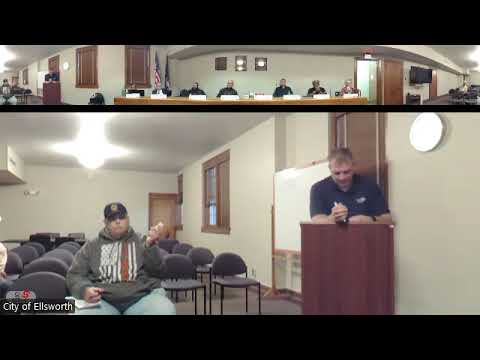
Presenter opened a training session for Ellsworth City officials to review the Kansas Open Meetings Act, executive-session rules and public-records obligations, saying the goal was to build consistent habits that protect transparency and reduce legal risk.
The session focused on the basics: a "meeting" under state law occurs when a majority of a governing body gathers to discuss city business, and those gatherings generally must be open to the public. "The public has the right to attend and watch the meeting," the Presenter said, stressing that streaming or recording increases public access and accountability.
Why it matters: presenters warned that informal or private discussions among a quorum — whether in person, by phone, by serial emails, or on social media — can violate the Open Meetings Act and expose the city to attorney-general scrutiny and possible fines. Staff member added that two members commenting together on a public social-media post had been deemed a meeting in a prior attorney-general opinion.
Key points covered
- Streaming and recordings: Presenters confirmed the meeting was being streamed and recommended using streaming to let the public "see directly what happened." They said recorded meetings typically improve public confidence and help avoid disputes about what occurred.
- Quorum and perception: Officials were urged to avoid informal gatherings where a majority might discuss city business; when a majority is likely to attend a public event, the Presenter recommended an announcement so the public can observe.
- Emails, serial meetings and social media: The presenters cautioned that emailing a majority about substantive city business or exchanging comments on the same social-media thread can create a forbidden private deliberation. Staff member advised running scheduling and special-meeting coordination through staff to minimize risk.
- Special meetings and notice: The training clarified that cities are not required to publish special-meeting notices in a newspaper but must notify anyone on the city’s meeting-notification list; in emergencies officials should make reasonable efforts to inform the public before acting.
- Executive sessions: Presenters reviewed lawful reasons for closed executive sessions — most commonly personnel matters, limited property-acquisition discussions to preserve bargaining positions, and some attorney-client consultations. They emphasized that the public vote or formal approval must occur in open session and that each executive-session motion should state the subject and legal justification.
- Attorney-client privilege cautions: Presenters read an attorney-general finding that a governing body had repeatedly used executive sessions to draft policy outside the public eye. They warned against using executive sessions as a substitute for public deliberation and advised carefully tailored motions and justifications when privilege is invoked.
- Open Records Act: Presenters reminded officials that many emails and documents generated in city business are public records. They recommended using city email accounts for official communications and forwarding non-city emails relevant to city business to a city account so records can be retrieved for public-records requests.
- Conflicts of interest: The session covered direct conflicts (financial benefit) and less-obvious recusal scenarios, such as board membership in a nonprofit that transacts with the city or close family ties to municipal employees.
Quotations and guidance
- "The public has the right to attend and watch the meeting," the Presenter said when explaining the Open Meetings Act.
- On executive sessions: "Do not share information you receive in executive session," the Presenter said, adding that the only correct public response after an executive session is to decline to disclose its contents.
Formal action
At the end of the session, a motion to adjourn the special council meeting was made by Councilor Adams Dallas, seconded by Councilor Hansen; the Clerk called the question, the motion carried on an affirmative voice vote, and the meeting was adjourned.
What to watch next: Presenters recommended that council members continue to route scheduling and substantive communications through staff, use city email for official business, and ensure executive-session motions precisely identify the subject and statutory justification before closing the public from deliberations.