Get Full Government Meeting Transcripts, Videos, & Alerts Forever!
Get email alerts on the Infrastructure topic
No spam. Unsubscribe anytime.
Henrietta opens public hearing on data-center rules, town proposes incentive zoning to require community benefits
Summary
During a lengthy public hearing, the Henreitta supervisor outlined a draft local law using incentive zoning to require data-center applicants to deliver community benefits (power upgrades, water and sewer improvements, noise mitigation) rather than rely on a local ban. Residents raised concerns about power capacity, water use and infrasound.
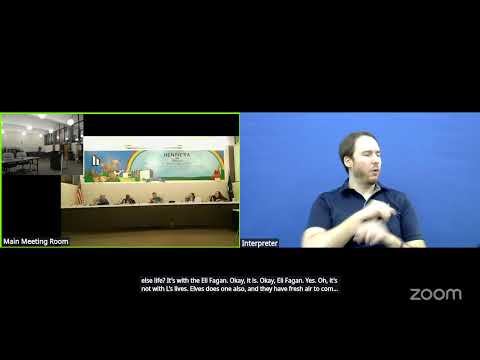
Henrietta leaders and residents spent much of the July 22 meeting debating a proposed local law that would regulate data centers through incentive zoning rather than attempt a ban. Supervisor Schultz told the audience the change shifts the burden of proof to applicants: instead of the town having to prove adverse impact, a company seeking a complimentary use must demonstrate how it benefits the town.
Schultz outlined three principal impact areas — power, water and sewer — and cited a past estimate that installing a new transformer in the area cost over $17,000,000. “If you're going to bring in… a bunch of power, you have to upgrade the substations so that there is more power available to the town than before the data center came in,” he said. Residents and technical speakers pushed back on environmental and health concerns: Matt Ferguson, who said he works in data-center construction, warned of "infra noise" and impacts to wildlife and wells; Rachel Sherman urged the board to include noise-pollution findings and to consider water conservation requirements. Legal limits were flagged by speaker Edward Campany, who cited Nolan v. California Coastal Commission and Dolan v. City of Tigard to emphasize that exactions must be related and roughly proportionate to the impacts alleged.