Get Full Government Meeting Transcripts, Videos, & Alerts Forever!
Get email alerts on the Transportation topic
No spam. Unsubscribe anytime.
SMTC presents Route 5 study: volumes steady, models predict 20–30% rise by 2050
Summary
Syracuse Metropolitan Transportation Council staff told the Fayetteville Village Board that Route 5 traffic volumes have been steady over two decades, with more than half of trips passing through the village. SMTC’s model projects PM-peak trips rising from about 1,200 to 1,500 by 2050, and staff outlined traffic-calming and signal-warrant findings.
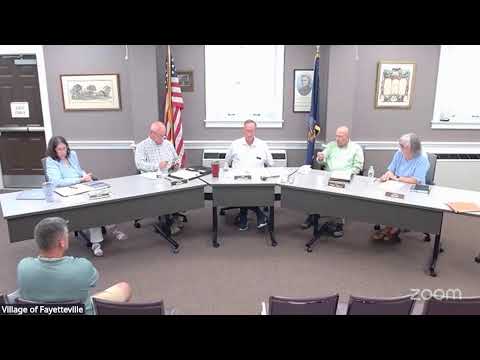
The Fayetteville Village Board heard a presentation from Syracuse Metropolitan Transportation Council (SMTC) staff on a Route 5 corridor study that updates a 2018 analysis and uses federal planning funds to project future traffic through 2050. Presenter (SMTC staff) summarized the SMTC role: “Syracuse Metropolitan Transportation Council is a metropolitan planning organization,” and explained the study’s purpose in updating counts and modeling future growth.
SMTC staff said annual average daily traffic along Route 5 has remained largely steady over the last 20–25 years and that the corridor functions as a day-long traffic generator because of destinations along the route. The report found that just over 50% of trips beginning or ending on the study section started and finished outside the village — a pass-through rate the consultant described as “average to below average” for comparable villages in the region.
On congestion and speed, staff reported modest improvements in travel time metrics and noted that 85th-percentile speeds are generally a few miles per hour above posted limits but not in a range the presenter called “concerning.” The presentation cautioned that some classes of delivery vehicles are not captured in heavy-vehicle counts, meaning e-commerce vans may be underrepresented in truck percentages.
Looking to the future, the SMTC model projects PM peak-hour trips to grow from roughly 1,200 to about 1,500 vehicles — a 20–30% increase spread over 25–30 years (approximately 1% per year). The presenter said that a variety of trade-offs would accompany intersection or corridor capacity projects (lane additions or roundabout options), including potential property takings and community impacts. Board members asked about autonomous vehicles and New York State DOT involvement; staff said the model does not account for autonomous vehicles and confirmed DOT participation in the study and inclusion of the Route 257/Route 5 intersection in the region’s 2031–2040 work plan for future study.
The SMTC report and slides were provided to the board and are available through SMTC; staff encouraged village officials to review the full study and consult with state DOT engineers on any proposed capital changes.