Get Full Government Meeting Transcripts, Videos, & Alerts Forever!
Get email alerts on the Book Challenge topic
No spam. Unsubscribe anytime.
Scores of community members urge Siuslaw board to keep challenged book Flamer in high‑school library
Summary
More than a dozen teachers, librarians, students and residents urged the Siuslaw School District board to retain the book Flamer in the high‑school library, citing student well‑being, professional vetting and the dangers of censorship.
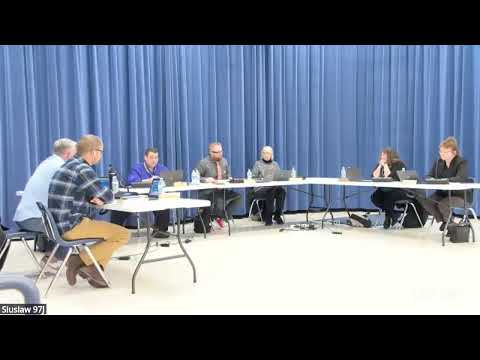
Multiple community members — including school staff, public‑library leaders, parents and students — addressed the Siuslaw School District board during the March 12 meeting to oppose removing Flamer from the high‑school library. Meg Spencer, director of the Siuslaw Public Library District, told trustees that librarians "buy books of all kinds so we can serve all kinds of readers" and asked that boards keep politics out of collection policy.
Jennifer McKenzie, the district teacher librarian, outlined the district’s professional vetting process (the meeting referred to a TidalWave/Bridawave system and a community review panel) and said the community review unanimously approved Flamer for the high‑school collection. McKenzie also warned of the time and expense of challenges, saying, "This book challenge may have cost our district and community $10,000 in time and effort; litigation for a book challenge could cost the community $250,000 to $400,000." Several teachers and students, including substitute teacher Shannon Hunt and student speaker Storm Engel, said the memoir‑graphic novel provides representation and could be lifesaving for vulnerable youth.
Speakers also raised concerns about proposed changes to supplemental‑materials policy that they said would slow teachers and impair instruction. Teachers told the board that a 30‑day formal adoption for supplemental resources would be impractical for on‑the‑ground instruction and harmful to teacher evaluation timelines. Commenters repeatedly urged trustees to preserve professional selection processes and to trust librarians and teacher expertise.