Get email alerts on the Dmv Cdl topic
No spam. Unsubscribe anytime.
DMV asks OTC to end limited‑term nondomicile CDL program after federal rule change
Summary
ODOT DMV told the commission that new permanent FMCSA regulations render Oregon's nondomicile limited‑term commercial credential program noncompliant; the agency recommended ending new issuances and allowing existing credentials to lapse at renewal, affecting about 900 holders and avoiding possible federal penalties and funding loss.
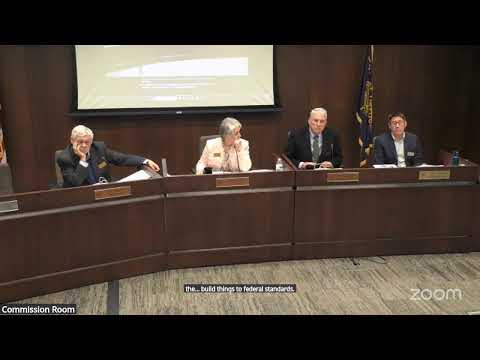
ODOT's DMV administrator, Amy Joyce, told the commission that changes at the federal level made the state's nondomicile limited‑term commercial driver's license program noncompliant and that the department recommended ending the program.
"Failure to abide by regulations regulating commercial driving privileges under the federal regulations can result in very severe penalties from FMCSA, including loss of significant federal funding and, eventually, the decertification of the entire commercial driver's licensing program for a state," Joyce said. She explained the department initially paused the program after an interim rule and subsequently pursued a rules advisory committee; FMCSA issued a preliminary finding of noncompliance and a final federal rule that narrowed state authority.
Joyce said roughly 900 limited‑term credential holders could lose commercial driving privileges at renewal; ODOT will not immediately cancel existing credentials but will be unable to renew them when the holder's authorized stay in the U.S. expires. ODOT flagged a potential federal funding exposure of about $23.5 million in FY27 if compliance is not restored, and described the recommendation as reluctantly necessary to preserve broader federal highway funding and CDL program certification.
Commissioners voiced concern for affected workers and impacted sectors (transit, trucking, school transport); staff said they provided notices to industry groups and would follow up with targeted outreach to affected employers.
AI generated
The text on this page is AI generated. Summaries, highlights, analysis, and video transcripts are all produced from the original source material.
AI can make mistakes, so if you spot one, and we will fix it for everyone.
Note: the source content is unaltered by us. Any content source we link to, be it a video, an audio recording, or a document, is presented exactly as its publisher released it. That publisher is usually a government body, sometimes an individual official or another organisation.