Get Full Government Meeting Transcripts, Videos, & Alerts Forever!
Get email alerts on the Amendment Two topic
No spam. Unsubscribe anytime.
Former state education commissioner urges caution on Amendment Two; local union leader appeals to protect all students
Summary
A former state education commissioner told the Anderson County Board that Amendment Two would broadly allow public funds to support private education and could divert K‑12 resources; local union leader Dr. Anissa Davis urged the board to think about equity for all students.
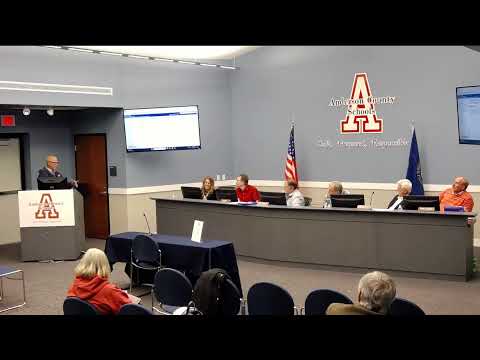
A former state commissioner of education told the Anderson County Board of Education on Oct. 14 that Amendment Two is 'extremely broad' and could allow future legislatures to direct taxpayer dollars to nonpublic schools, potentially diverting funds from public K‑12 education.
The presenter, introduced by the superintendent as a former commissioner, said the amendment "permits future General Assemblies to allocate taxpayer dollars for private school purposes" and warned that the change could force legislatures to either increase resources for private schools or divert funding away from public schools. He cited several constitutional provisions by number to explain how the amendment would alter existing restrictions and said he intends to vote no. "If Amendment Two passes will we see a dramatic increase in student performance in the state... and will we be in a better financial position to educate all the children?" he asked the board.
Dr. Anissa Pen Davis, president of the Anderson County Education Association, addressed the board during public comment and urged members to consider what kind of school system they want. Using a long metaphor, she asked whether schools should be allowed to "take all the blueberries"—meaning to accept all students and help them improve—rather than pick only the "best" entrants. "As you're thinking about Amendment Two over the next few weeks I want you to think about the school system that you want your child to go to," she said.
The two presentations framed Amendment Two as a statewide policy decision with local consequences; the commissioner emphasized fiscal and oversight risks while the union leader appealed to equity and the district's responsibility to serve all students. Board members listened and discussed contingency planning for potential changes to state SEEK funding and district budgeting in future sessions.