Get Full Government Meeting Transcripts, Videos, & Alerts Forever!
Get email alerts on the Violence Prevention topic
No spam. Unsubscribe anytime.
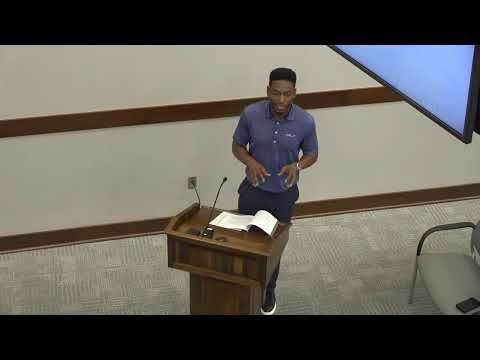
State Rep. Jeremy Gray pitches regional ECHO violence-prevention pilot for East Alabama
Summary
State Rep. Jeremy Gray asked Opelika officials to join a multi-jurisdiction pilot using the University of Chicago–linked ECHO curriculum to train community mediators and a future 'street team'; Gray said he has set aside roughly $17,000–$18,000 and secured a $15,000 training quote to certify about 50 people.
State Representative Jeremy Gray asked the Opelika City Council on July 21 to join a regional pilot of the East Alabama Conflict Resolution and Violence Prevention Initiative that would use the University of Chicago–based ECHO (Every Choice Has Opportunity) curriculum to certify community mediators.
Gray described the plan as a multi-jurisdictional effort covering Lee, Russell and other nearby counties so the program could match the scale of larger cities. "We started in Lee County and Opelika," Gray said, adding the initiative has reached three counties so far. He described a two-day training that would be about five hours per day, aimed at training about 50 participants, and said he had set aside roughly $17,000–$18,000 from community-service funds and received a $15,000 quote for the initial training.
Gray said the curriculum focuses on social-emotional learning, de-escalation, mediation and mindfulness and is intended for people ages 13–21 but transferable to other groups. "If we start off with at least conflict resolution ... it can decrease retaliation 30 to 60%," he said, citing published program results. He asked the council to consider appointing a member to the initiative's consortium and to provide data and long‑term partnership as the pilot develops.
Council members asked about data sources and school involvement; Gray said initial data came from Monroe County and police heat maps and that the team planned to request disciplinary and suspension data from local superintendents. He also noted a state bill passed this year requires conflict-resolution instruction in schools but is an unfunded mandate, which is why he proposed a localized pilot tailored to rural and suburban East Alabama.
The initiative includes plans for a future "street team" of trained community members and an evaluation framework that would track disciplinary removals, suspensions and local crime metrics to measure impact. Gray and the presenters emphasized the pilot is community-led, with law enforcement as a partner rather than the lead.
Next steps discussed on the record included continued outreach to school superintendents and cities, finalizing training dates (August or September was suggested) and further conversations about funding and data-sharing agreements.