Get Full Government Meeting Transcripts, Videos, & Alerts Forever!
Get email alerts on the Data Quality topic
No spam. Unsubscribe anytime.
Witnesses urge in-house, open-source approach to fix county property data and valuation methods
Summary
Experts and coauthors urged Allegheny County to consolidate siloed property data, hire a small technical team, and use open-source automated valuation methods to reduce errors, increase transparency, and lower long-term costs compared with proprietary vendor models.
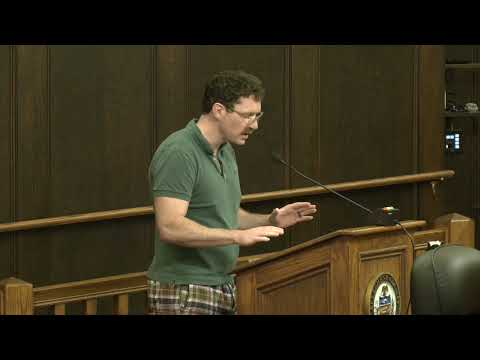
Multiple witnesses presented on the county's property data quality and recommended building internal capacity to manage reassessments. Dr. Jack Billings said parcel datasets across county systems do not always match survey point data and cited an internal sample showing roughly a 10% inaccuracy rate across key fields like lot area and building characteristics. "We just aren't really talking to each other," Billings said of the county's various departments and municipal data stores.
Witnesses recommended a small, in-house team of 5–10 skilled professionals — data analysts, a data scientist familiar with machine learning, and senior appraisal staff — to consolidate, clean and model existing data. Connor Schwartz, a coauthor of Pro Housing Pittsburgh's report, said publicly available open-source tools can assess residential parcels cheaply and quickly and urged the county to adopt similar methods in-house rather than rely on proprietary techniques that could be opaque to the public.
Both witnesses emphasized transparency: publish data portals and open-source code so the public can review methodology and identify data errors. Billings warned that contracting entirely to a private firm that uses proprietary valuation techniques could create distrust and a 'black box' for residents and recommended running the evaluation methods in-house with open access to code and methodology.
Council members asked follow-up questions about where data mismatches exist (examples included parcel lot sizes and inconsistent building records) and discussed using council IT and process-improvement committees to explore data integration options.