Get Full Government Meeting Transcripts, Videos, & Alerts Forever!
Get email alerts on the Assessment Costs topic
No spam. Unsubscribe anytime.
Pro Housing Pittsburgh economist: infrequent reassessments cost county 'tens to hundreds of millions' annually
Summary
Dr. Jack Billings told the committee that Allegheny County's decades-long gap in regular assessments causes mispricing, distortion and administrative waste, estimating the annual cost of inaction at 'tens to hundreds of millions' while outlining much lower annual costs to modernize assessment methods.
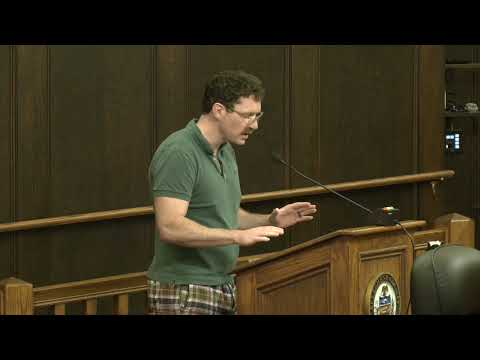
Dr. Jack Billings, research committee chair for Pro Housing Pittsburgh, told the committee Allegheny County has not done regular countywide assessments in nearly 50 years and that infrequent reassessments impose large economic costs on residents and governments. "The people of Allegheny County are losing, in lost welfare, tens to hundreds of millions of dollars per year," Billings said, urging adoption of a regular reassessment cycle.
Billings compared traditional manual reassessment models (roughly $10,000,000 per year under a multi-year, staff-heavy approach) with modern methods using computerized mass appraisal and open-source automated valuation models. He cited a Tyler Technologies quote of $65–$68 per parcel and noted Allegheny County has roughly 580,000 parcels, producing a $37 million–$40 million total under that per-parcel quote; by contrast, he estimated that consolidating existing county data and running open-source models could cost on the order of $1,000,000 per year.
Billings emphasized that the estimates are directional and that county data contain errors: in a 100-parcel sample his team found about 10% of key data points inaccurate, including parcel lot sizes and building records. He recommended an in-house team of roughly 5–10 skilled professionals (data analysts, appraisers, and data-science support) to consolidate and clean data and to run transparent, open-source models rather than rely on proprietary vendor methods that could create a "black box." "Make sure that that entire process is transparent," he told the committee.
Billings also highlighted Pro Housing Pittsburgh's public materials, including a 47-page report and an Explore tool (explore.prohousingpgh.org) that models likely new assessments and provides ranges to reflect uncertainty; he cautioned homeowners that the tool's outputs are estimates and that the county may use different methods when it proceeds.
No council vote or formal commitment to a specific cost model occurred at the hearing; Billings' figures were presented as testimony to inform council deliberations.