Get Full Government Meeting Transcripts, Videos, & Alerts Forever!
Get email alerts on the Development Displacement topic
No spam. Unsubscribe anytime.
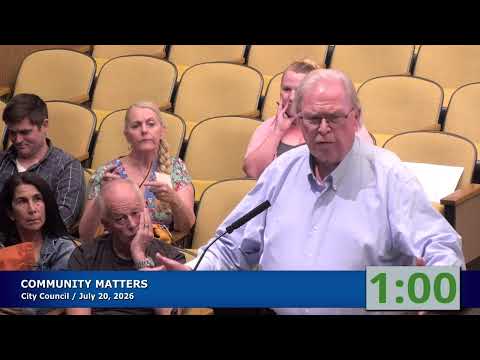
Residents, faith leaders urge council to reconsider student-housing approvals near 10th & Page
Summary
Dozens of public commenters said recent approvals for student-focused developments threaten long-standing Black neighborhoods; speakers asked council to pursue zoning changes and community benefits to protect displacement-vulnerable residents.
Public testimony during two community-matters periods focused heavily on the Mark project and broader concerns about luxury student housing in 10th & Page and Fifeville. Multiple speakers tied recent development approvals to historic patterns of displacement in Charlottesville.
"Decisions that reshape neighborhoods should never be made in ways that leave people most affected feeling unheard, uninformed, or overlooked," Reverend Dr. Arthur S. Long Jr. said, urging council to prioritize transparency and community participation. Several neighbors referenced the demolition of Vinegar Hill as historical precedent and called for stronger zoning protections and community benefit agreements.
Speakers included long-time residents and historians who cited research on studentification and displacement. Laura Golblad, who reviewed scholarly literature, told council that studies she examined consistently found that private market student housing projects drive displacement and do not ‘trickle down’ to very low-income households. Other commenters asked council to explore zoning text amendments, expand the core neighborhood overlay, and require developers to commit to community benefits such as affordable housing units or neighborhood services.
Council and staff responded with legal and procedural clarifications. The city attorney advised that certain actions (such as rescinding a final certificate of appropriateness) are not legally available under the historic-review process, but council members noted there remain policy levers — including zoning text amendments and IPP expansion — that could be pursued to address community concerns.