Get Full Government Meeting Transcripts, Videos, & Alerts Forever!
Get email alerts on the Mcad Perspective topic
No spam. Unsubscribe anytime.
MCAD urges clarity: municipal HRCs best used for outreach while state handles adjudication
Summary
MCAD witnesses told the council that local human rights commissions can provide valuable community outreach and early resolution but historically lack funding and capacity for full legal investigations; MCAD described an online filing initiative and statutory reorganization to speed state processing.
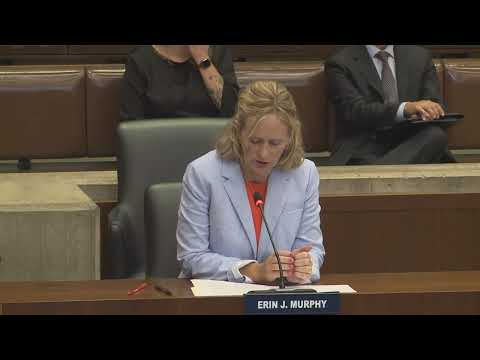
A representative of the Massachusetts Commission Against Discrimination (MCAD) told the committee that municipal human rights commissions were originally created to assist MCAD by handling local intake and education but that, in practice, many local HRCs have lacked sufficient funding and legal capacity to carry out complex investigations or adjudications.
"Local commissions are very rarely funded or staffed at a sufficient level to perform the complex investigation, adjudicatory, or mediation‑based functions that are required in assessing a discrimination case," the MCAD representative said, and described MCAD's recent statutory reorganization, online filing portal and other procedural updates intended to shorten timelines and improve case management. The representative urged municipalities to focus HRCs on outreach, mediation, and helping residents file state complaints where appropriate.
MCAD also said it wants to strengthen partnerships with municipal HRCs — for example by enabling local staff to assist constituents to file complaints on the MCAD online portal — but warned that local investigations often require MCAD to duplicate work when local bodies lack evidentiary development.