Get Full Government Meeting Transcripts, Videos, & Alerts Forever!
Get email alerts on the Adu topic
No spam. Unsubscribe anytime.
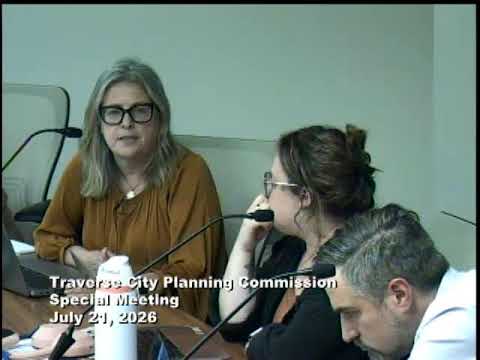
Planning commissioners debate ADU rules, setbacks and a preapproved plan option
Summary
The commission discussed three options for ADU/second-unit rules: remove ADUs in some districts, relax ADU restrictions, or combine ADU and second-unit standards; commissioners emphasized rear setbacks, the 800 sq ft cap, owner-occupancy and suggested exploring preapproved plans or a pattern-book approach tied to an 'attainable housing' tool.
Planning staff outlined three options for updating accessory dwelling unit (ADU) and second‑unit rules in R‑1 districts: eliminate the ADU option and rely on the second‑unit standard; keep ADUs but relax restrictive standards; or combine the two approaches into a unified, flexible standard.
"We're seeing fewer ADUs and more 2nd units," Leslie said as background, and noted constraints such as minimum lot sizes and a 25‑foot rear setback that make some parcels ineligible for second‑unit development. Commissioners described real‑world experiences: one commissioner said his brother built a second unit and encountered lengthy permitting and setback issues, while others argued the current 800‑square‑foot cap on ADUs is too rigid for small primary homes.
Commissioners and staff discussed owner‑occupancy requirements and the annual ADU registration fee, with several members describing the registration as extra paperwork that can hurt owners when circumstances change. Jackie and Mitch urged the commission to consider preapproved plans and the City Commission’s recent endorsement of a state 'attainable housing tool' that could pair tax incentives with preapproved designs to reduce upfront costs for small landlords and homeowner builders.
Several commissioners suggested maintaining both ADU and second‑unit paths while reducing unnecessary restrictions (for example reconsidering the 25‑foot rear setback and the entrance‑location rules) and asked staff to return with options that preserve 'gentle infill' and protect neighborhood character. Staff also reported a vendor estimate of roughly $50,000 for creating a preapproved‑plan program, and recommended stacking incentives (permit waivers, tax breaks) to improve affordability.
No ordinance was adopted at the study session; staff will collect the commission’s notes and return with draft amendment language.