Get Full Government Meeting Transcripts, Videos, & Alerts Forever!
Get email alerts on the Infrastructure Costs topic
No spam. Unsubscribe anytime.
Keystone Heights workshop outlines septic‑to‑sewer options as CCUA flags higher costs
Summary
City council workshop on May 12 heard from Clay County Utility Authority (CCUA) that a planned plant expansion jumped from about $7 million to over $9 million, potentially raising capacity fees; council asked CCUA to scope a phased study and pursue grants to lower homeowner costs.
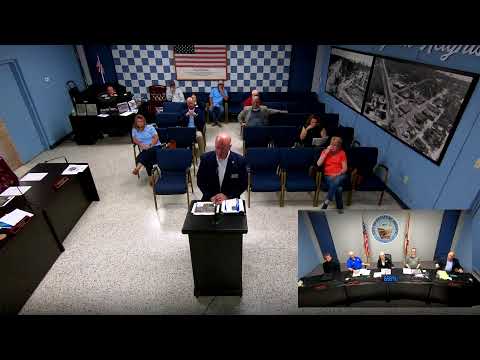
Keystone Heights held a public workshop on May 12 to review options for converting septic systems to sewer service and to hear Clay County Utility Authority (CCUA) analysis of capacity, costs and funding pathways. Mayor Rumrill opened the session and invited CCUA Director Mr. Johnson to brief the council and community on recent cost estimates and policy constraints.
Mr. Johnson told the council that a planned expansion of the Keystone wastewater plant is now estimated at ‘‘over $9,000,000,’’ up from an earlier expectation of about $7,000,000, which would push capacity fees to roughly $15,000 per equivalent residential connection compared with current CCUA capacity fees of about $5,000. He said rising material and fuel costs and equipment price volatility are driving the increase and that CCUA’s service policy is ‘‘development pays for itself’’ and operates on a first‑come, first‑served basis.
Councilmembers and residents pressed for detail on homeowner out‑of‑pocket costs, which CCUA illustrated with prior projects and present estimates: a simple abandonment and gravity hook up could be roughly $5,000 in labor and equipment; low‑pressure/grinder pump conversions could approach $12,000; and completed septic‑to‑sewer projects in other areas have ranged from about $20,000 up to CCUA estimates of $40,000–$50,000 per household at today’s prices. One local example discussed during public comment described a homeowner told to connect and pay about $18,000.
Participants discussed phased approaches that prioritize lakeside properties and other environmental priorities, the practical threshold of household participation for viability (often 75%), and the need for a technical study and public outreach to identify ‘‘lowest hanging fruit’’ for grant applications. The council requested that CCUA work with city staff to scope a two‑task study (concept options and a public charrette) and to explore grant opportunities; Johnson said he would seek to include a study scope in CCUA’s upcoming budget process.