Get Full Government Meeting Transcripts, Videos, & Alerts Forever!
Get email alerts on the Detection Chemistry topic
No spam. Unsubscribe anytime.
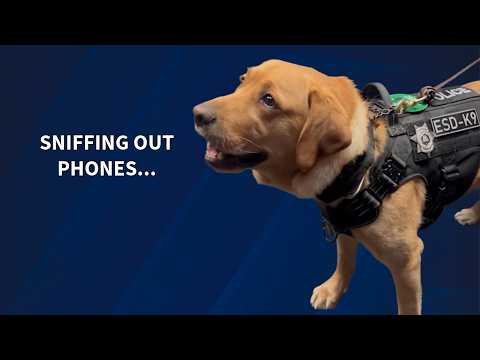
Handlers say canines detect TPPO residue on electronics, not 'internet signals'
Summary
Handlers said the dogs are trained to detect a chemical residue (TPPO) used on electronic components; training focuses on teaching dogs to switch into 'work mode' so they can find devices in environments where electronics are common.
Handlers and trainers explained that electronics-detection canines are trained on a chemical residue commonly present on electronic components, not on wireless signals or data. "They call it TPPO," handler Josh Paxman said, describing how the chemical is applied to solder on circuit components and is present on digital media that stores data.
Paxman said that training focuses on distinguishing work time from the many everyday electronics people carry. "We really start with the pre-search ritual to really ingrain in the dog like, hey, right now this is work time," he said, describing reset and reward routines that help the dog indicate target odor in rooms full of phones and computers. Officials emphasized that dogs provide an investigatory tool to locate devices; department staff still examine devices to determine whether illegal content or a probation violation exists.