Get Full Government Meeting Transcripts, Videos, & Alerts Forever!
Get email alerts on the Budget Appropriations topic
No spam. Unsubscribe anytime.
Budget staff outlines how $13.36 million for Bavi recovery was calculated
Summary
Budget office staff told the committee the $13,361,849 figure was a residual after netting prior obligations from an $88 million excess-collections estimate and identified specific line items (airport, childcare, special fund shortfalls) that produced the odd total.
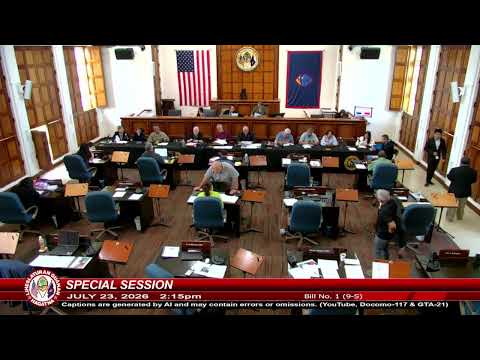
Budget office staff walked the Committee on General Government Operations and Appropriations through the arithmetic behind an unusual $13,361,849 figure proposed to cover Super Typhoon Bavi recovery.
"So our $88,000,000 goes down to 62,639,319," said Lester Carlson while explaining deductions that included $20 million for GIAA, $5 million for DOC and $890,000 for the legislature. Carlson said a June special fund shortfall of about $3.8 million and line items such as airport and childcare obligations further reduced the available balance to the $13.36 million residual under consideration. "That brings us to $25,890…so our $88,000,000 goes down to 62,639,319," he told the committee (presentation of available funds and netting methodology).
Senators pressed for clarity on which costs would be covered from the $13.36 million and how much remained available after anticipated reimbursements from FEMA. Carlson told the panel that previously authorized pre-landfall funds (used during earlier events) had been spent or encumbered in part and that the $13.36M was intended to address uncovered response activities, especially overtime and debris-management costs. He added that agencies should continue to pursue federal reimbursement and that anything unexpended would revert to the rainy-day fund per existing rules.
The discussion also clarified that some amounts (for example, a mayoral council allocation) are treated differently under the law and, where statutory language permits, may remain available until fully expended. Senators asked for follow-up documentation; Carlson said staff would provide the task orders, estimates and the revised worksheet used in the hearing.
The committee recessed and scheduled a second round for further line-item review and to firm up any clarifying language for mayoral fund access.