Get Full Government Meeting Transcripts, Videos, & Alerts Forever!
Get email alerts on the Public Concerns topic
No spam. Unsubscribe anytime.
Audience raises concerns about parking, vouchers and how a bond would help lowest-income renters
Summary
Residents asked if parking reductions and middle-housing rules would harm livability, how a bond could help people at 30% AMI, and whether bond proceeds could fund vouchers; city staff clarified limits and described voucher reliance for the very-low-income population.
During an extended audience Q&A, residents pushed panelists to explain whether policy changes (parking reductions, middle-housing rules) and a proposed bond would address the needs of very-low-income renters and workforce households.
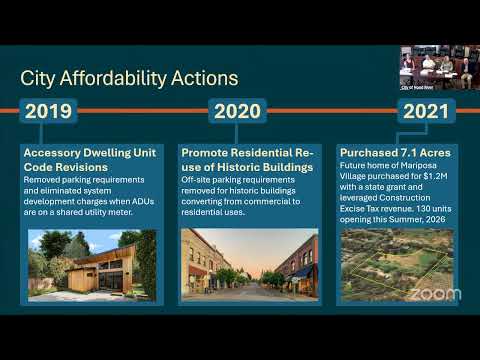
On parking, an audience member asked whether converting commercial downtown buildings to housing and new smaller homes would come without off-street parking and whether that would create livability problems. The moderator clarified that downtown commercial-to-residential conversions are not required to add parking and the citywide middle-housing code allows a single off-street parking space per home for units 1,200 sq ft or smaller; uptake of that provision has been limited so far.
Several residents asked how people at 30% AMI would be served. Karen Long said that rental assistance (tenant- or project-based vouchers) is the practical tool to serve households at or below 30% AMI and that housing authorities operate long waiting lists for vouchers; she emphasized the city and providers have limited voucher funding and long waits. On whether bond funds could pay for vouchers, the moderator advised that bonds are capital-only and cannot be used for ongoing rental assistance: "bonds are for capital costs only, so land, construction... bricks, sticks and land."