Get Full Government Meeting Transcripts, Videos, & Alerts Forever!
Get email alerts on the Infrastructure Dam Safety topic
No spam. Unsubscribe anytime.
Highway superintendent warns Johnson Creek dam remains a ‘significant hazard’; town keeps emergency plan
Summary
Highway Superintendent Arthur Marcos told the Select Board the Johnson Creek (Meadow Pond/Salem Street) dam is classified as a significant‑hazard earthen embankment, described structural problems and recent temporary repairs funded with about $150,000 in Chapter 90 funds, and urged outreach and tabletop training for downstream residents and first responders.
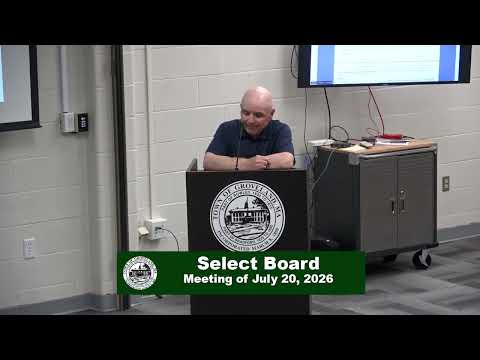
Arthur Marcos, Groveland’s highway superintendent, reviewed the town’s emergency action plan for the Johnson Creek dam at the Select Board’s July 20 meeting, saying the dam is an earthen embankment built in 1913 that the state classifies as a "significant hazard potential dam." Marcos told the board the site includes subsurface voids and a collapsed corrugated pipe and that utilities — including a 12‑inch high‑pressure gas line — run across the roadway above the structure, creating a broad public‑safety exposure.
"The dam was constructed in 1913… the existing impoundment is an earthen embankment," Marcos said, and he described the town’s temporary repairs last year. He told the board the town spent about $150,000 of Chapter 90 road funds on a temporary stabilization and a structural liner designed to extend service life while long‑term options are explored. Marcos said the liner is expected to last about 30 years, giving the town time to plan a permanent fix or an alternative such as removal and replacement with a culvert.
The presentation walked members through the EAP’s watch and warning classifications and the chain of notifications and responsibilities. Marcos said the plan documents which households would need immediate evacuation and lists police, fire, highway, MEMA and state resources that would be mobilized. He urged follow‑up steps the plan recommends, including semiannual inspections, a tabletop exercise with police and fire, and annual public meetings for downstream residents. "We gave this already to our all responsible parties and all the utilities," Marcos said; "it gives us a clear line of action if anything ever does happen."
Board members pressed for further detail on inspection timing and resident notification. One member asked whether the recommended annual public meeting had been held; Marcos said the interagency tabletop had occurred in May but that the public outreach had not yet been completed. Select Board members suggested the town send an annual letter to downstream households and hold neighborhood meetings at a nearby fire station to avoid alarming residents while ensuring they are informed.
Marcos also summarized funding and technical paths for a permanent solution. He said state and federal grants are available — often favoring dam removal — but that design, permitting and conservation work will drive costs and schedules. The board asked Marcos to coordinate a near‑term plan for resident outreach and to confirm the inspection schedule and the town’s consultant timeline for pursuing repairs or removal.