Get Full Government Meeting Transcripts, Videos, & Alerts Forever!
Get email alerts on the Contextual Overlay topic
No spam. Unsubscribe anytime.
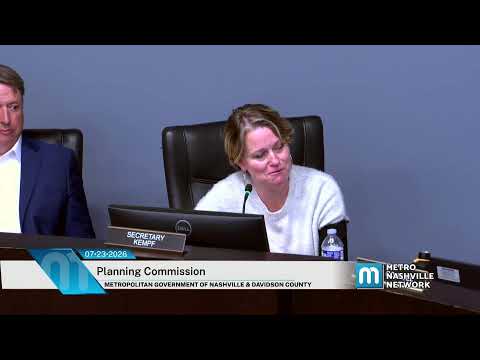
Planning commission disapproves Shepherd Hills contextual overlay after housing access concerns
Summary
The commission voted to disapprove a proposed contextual overlay for Shepherd Hills/Twin Hills, citing concerns that overlay standards could limit housing variety and affordability; staff had recommended approval with a substitute ordinance.
The Planning Commission voted to disapprove a request to apply a contextual overlay district to properties along Shepherd Hills Drive and Twin Hills Drive after commissioners raised concerns the overlay could unintentionally limit housing types and increase development costs. Planner Jeremiah presented staff’s recommendation to approve a substitute ordinance with design standards for setbacks, building height, lot coverage and access.
Council member (applicant absent) said concerns centered on whether the overlay, even without changing base zoning, would have the “practical effect of denying more affordable housing types” by constraining height and setbacks. Commissioner Smith and others asked staff how the overlay differs from the existing zoning-contextual setback rules; staff replied the overlay does not alter base zoning and duplexes or subdivisions still would be permitted under existing zoning. Despite staff’s explanation, the commission voted to disapprove the overlay on a motion by the council member.
The commission also directed staff to return to a future work session to clarify when and how the contextual overlay tool should be used, reflecting multiple commissioners’ requests for clearer policy guidance before applying the tool more broadly.