Get Full Government Meeting Transcripts, Videos, & Alerts Forever!
Get email alerts on the Ems Funding topic
No spam. Unsubscribe anytime.
Board debates county EMS funding resolution amid concerns about costs and local control
Summary
Trustees pressed staff and the fire department on a county-proposed EMS funding resolution, raising questions about startup and administrative fees, assessed‑value distribution of funds, and possible tax impacts; staff said the measure is primarily a county funding mechanism to maintain EMS services and that an intergovernmental agreement would follow.
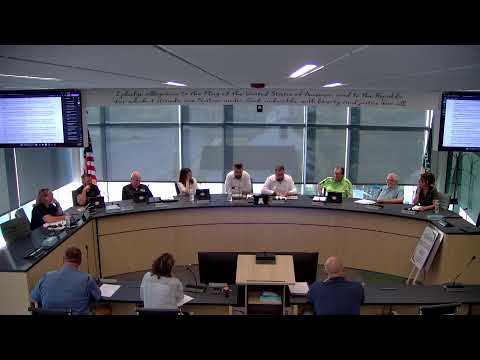
The Kewaskum Village Board spent an extended portion of its July 20 meeting discussing a county-proposed EMS funding resolution (listed as Resolution 2026‑07/08). Village staff presented the resolution as a county funding mechanism intended to sustain ambulance and EMS services across Washington County; staff recommended approval but trustees raised several fiscal and control concerns.
One committee member asked whether "the startup fee alone is $300,000 to participate with Washington County for this?" and expressed worry that larger municipalities could consume disproportionate funds. Assistant Chief Greschel and Village Administrator Gitter responded that the proposal is intended to distribute county funds to EMS systems and that the money "specifically states you cannot use any of these monies for any fire." Greschel said the village stands to receive about $65,000 through the county plan that could help cover the West Bend contract. Staff cautioned that opting out could leave the village taxed without receiving the redistributed funds and that the next step would be developing an intergovernmental agreement between each community and the county.
Trustees questioned levy limits and whether assessed-value distribution would advantage larger jurisdictions; concerns included that the county administrative fee (described in the discussion as $300,000) and a $1 million grant reduction could shift costs onto local taxpayers. The board’s discussion continued without a final vote recorded in the transcript excerpt. No formal decision or vote on the resolution appears before the transcript ends; staff indicated further work on the intergovernmental agreement is the next step.