Get Full Government Meeting Transcripts, Videos, & Alerts Forever!
Get email alerts on the Budget topic
No spam. Unsubscribe anytime.
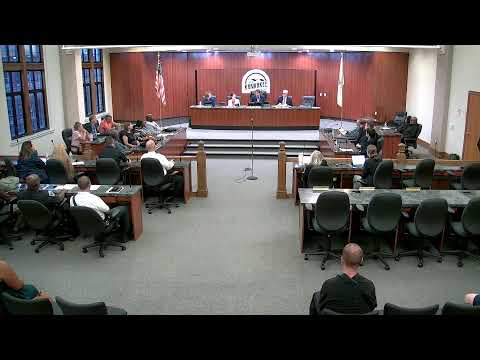
Kankakee council adopts FY2026–27 budget after cautious revenue forecast
Summary
The City of Kankakee adopted its FY2026–27 budget, projecting roughly $39.3 million in revenue and approving a narrowly positive surplus; council and staff emphasized conservative revenue estimates and noted a $1.1 million reduction in ambulance reimbursements that pressured planning.
The City Council voted unanimously to adopt the City of Kankakee’s FY2026–27 annual budget on second reading, approving a plan administration described as deliberately conservative on revenue. Mayor (speaker 2) told the council that projected revenues were intentionally understated to avoid unexpected deficits and that the adopted budget would leave a surplus of $527.43.
The budget presentation acknowledged significant pressures on the revenue side, most notably an approximately $1.1 million decrease in ambulance reimbursements that the administration said created a major gap to cover. Budget-committee remarks at an earlier meeting described draft revenues of about $39.3 million and draft expenses near $39.273 million; the committee had previously noted a draft surplus figure that differed from the administration’s final presentation. "We want to be very fiscally sound in that," the mayor said during the meeting.
Council members praised staff work on cost management and the budget process. Alderman O'Brien and others said the administration and Comptroller Rogers had been conservative on revenue estimates and careful on expense forecasting, which they argued produced a stable position going into the fiscal year. The adopted ordinance passed on roll call 12–0.
Public comments at the hearing focused on community priorities — particularly violence prevention and housing stability — and several residents urged the council to increase programmatic spending in those areas. The council record shows the budget takes a conservative stance on new taxes and fees; the administration said it preferred to expand revenues through economic development rather than raise existing resident fees.
The ordinance takes effect for the fiscal year beginning May 1, 2026; city staff and departmental leaders will implement budgeted programs and track any needed midyear adjustments.