Get Full Government Meeting Transcripts, Videos, & Alerts Forever!
Get email alerts on the Pedestrian Safety topic
No spam. Unsubscribe anytime.
Resident urges Beltrami County to install pedestrian‑activated warning lights at Lake Bemidji crossing
Summary
Karen Snortland, speaking during public comment, asked the Beltrami County Board to install solar, push‑button or sensor‑activated warning lights at the County Road 20 crossing through Lake Bemidji State Park, citing counts of vehicle and pedestrian use and safety concerns.
Karen Snortland, who identified herself and gave her Bemidji address, told the Beltrami County Board she and members of the Friends of Lake Bemidji State Park want additional safety equipment installed where County Road 20 (Birchmont Beach Drive) crosses the state park.
"With the speed limit of 55 miles per hour at the crossing, we feel this is a fatality waiting to happen," Snortland said, citing a Beltrami County Highway Department estimate that about 2,700 vehicles use the corridor daily and the group's own park count of roughly 6,000 pedestrian crossings between Sept. 24 and April 25. She said the park also recorded "approximately 200 pedestrian crossings" on some days and described a hill to the east that limits drivers' sightlines.
Snortland outlined a specific proposal: a solar‑powered alert sign with a battery‑free push button or sensor that would activate a caution light visible from over 1,000 feet and which, she said, installs on a standard post and requires little operating expense. "This would allow the park visitors to take charge of their own safety by alerting drivers to their presence," she said.
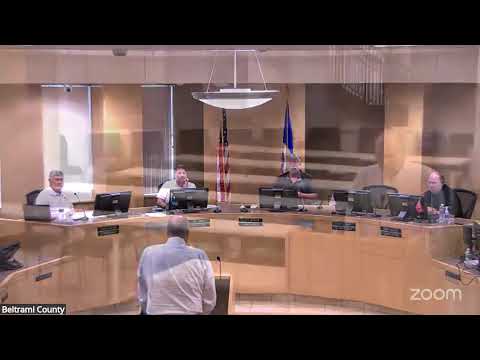
Board members did not take formal action during the public comment period. The chair responded that the board does not typically provide on‑the‑spot feedback but indicated the county may follow up: "You may hear from somebody at some point," the chair said. Snortland concluded by offering to work with county staff on a feasible solution.
The request raises specific follow‑up items for staff if the board chooses to pursue the idea: confirm the highway engineer's view on site suitability, verify the county or state right‑of‑way rules for installing active warning signs on County Road 20, obtain up‑to‑date traffic and pedestrian counts, and estimate installation and maintenance costs for a solar, push‑button system.