Get Full Government Meeting Transcripts, Videos, & Alerts Forever!
Get email alerts on the Land Use topic
No spam. Unsubscribe anytime.
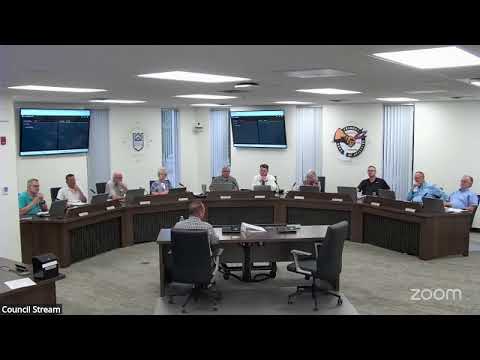
Council approves conditional use permit for girls' group home at 749 East 32nd after 7'-1 vote
Summary
After a continued public hearing, the Fremont City Council approved a conditional use permit for a girls-only group home at 749 E. 32nd with conditions and an added whereas clause clarifying revocation for violations; the vote was 7–1.
The Fremont City Council approved Resolution 2026-085 on June 9 to authorize a conditional use permit for a girls-only residential group home at 749 East 32nd, carrying the motion 7–1.
Planning Director Jeff Ray told the council the property was previously configured as a memory-care facility and that planning and the police department worked with the applicant to draft operating conditions meant to mitigate community impacts. "We did have another meeting with the applicant and the police department to express some concerns that had been voiced within the community," Ray said, and staff incorporated operational conditions into the proposed resolution.
Applicant Cynthia Cusick, who said she would serve as the on-site clinical director, described past group-home experience and said the program would start small and pursue reunification with families when appropriate. "I have had a group home previously also with young women, and it went very successfully," Cusick said. She told council the operator would consider Fremont children closely in the placement process and would not accept residents solely to fill beds.
Council members pressed staff and the applicant on practical issues: whether first preference would be given to Fremont students, how special-education (IEP) costs would be handled by the school district, and what on-site staffing and phased intake would look like. Cusick said placements would be selected for program fit and that, while Fremont children could receive preference in tie-breaker situations, the most qualified candidates would be admitted. On school and staffing implications, a councilmember noted that the school district "will have to make up that difference" if state and federal aid do not cover the full cost of special-education services.
Councilman Warner moved to approve the resolution as amended to add a whereas clause clarifying that violations of the CUP could lead to revocation under the Unified Development Code; Councilman Jensen seconded. The motion carried 7 yays, 1 nay. The resolution incorporates the operational conditions discussed in planning review and establishes a process for enforcement and potential revocation should the operator fail to meet those conditions.
Next steps: with council approval the applicant may proceed with licensing and site preparations under the conditions set in the CUP. The council discussion signaled ongoing oversight: staff and police will monitor compliance, and the CUP may be brought back before council if alleged violations arise.