Get Full Government Meeting Transcripts, Videos, & Alerts Forever!
Get email alerts on the Regulating Plan topic
No spam. Unsubscribe anytime.
Consultants describe 'regulating plan' as site-specific form-based code for MCI site
Summary
Consultants from Speck Dempsey and Community Scale told the master plan committee that a regulating plan is a site-specific, form-based approach that focuses on public-realm design, frontage lines and build-to rules rather than verbose use-based zoning. They said design controls can be held in a plan and administered at site-plan review.
Consultants from Speck Dempsey and Community Scale gave the MCI committee an introduction to what a "regulating plan" is and how it differs from traditional zoning. Jeff Speck said the approach is "a much, I would say, simpler and more site specific way to do what's called a form based code," adding that the tool emphasizes public-realm design, frontage lines, setbacks and where retail should be located rather than detailed lot-by-lot prescriptions.
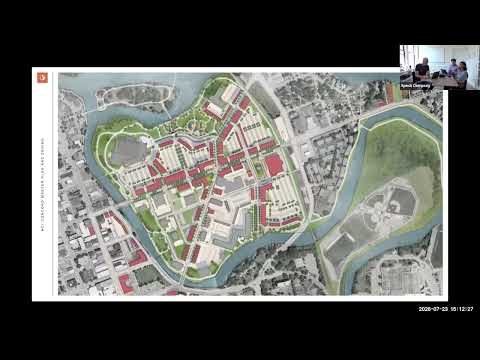
Speck illustrated the concept with projects in Elkhart, Fishers and Lancaster, showing how a two-page regulating plan can set building lines, allowed story ranges, curb-cut locations and preserved specimen trees while leaving some flexibility about parking type and exact building footprints. Nels Nelson of Community Scale told the committee that regulating plans can be paired with zoning mechanisms so that the town retains certainty about major outcomes while design details are administered through a plan held by the planning board.
Committee members said the visual, place-based framing helped them understand how controlling the public realm can shape long-term outcomes. The consultants emphasized that a regulating plan does not attempt to control every lot-level detail but instead focuses on what most affects the public realm and the experience of streets and civic spaces.
Next steps: consultants will continue refining the plan and advise how to attach the regulating plan to Concord's zoning so the committee can consider a legal pathway that fits the town meeting and subdivision processes.