Get Full Government Meeting Transcripts, Videos, & Alerts Forever!
Get email alerts on the Compliance Vs Accessibility topic
No spam. Unsubscribe anytime.
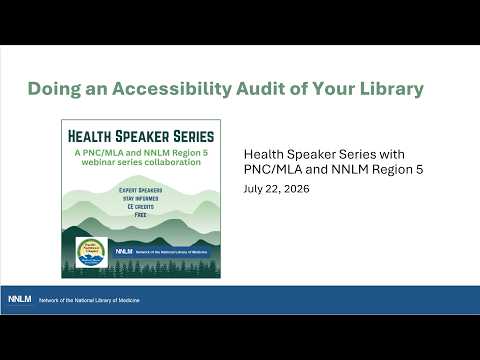
Presenter: 'Compliance is the floor' — why libraries must aim beyond ADA minimums
Summary
At NNLM Region 5's webinar, JJ Pianchi warned that meeting ADA requirements alone can leave patrons with disabilities excluded, citing the 2019 Queens Public Library example and urging planners to treat accessibility as a design goal, not just legal compliance.
JJ Pianchi told attendees that legal compliance should be viewed as a starting point, not the end goal. "Compliance is the floor," he said, adding that relying solely on minimum legal standards risks creating a "second class" experience for patrons who need inclusive design.
As an example, Pianchi described a 2019 Queens Public Library project that cost roughly $40,000,000 where patrons could reach book stacks only by stairs; he said that when architects were questioned they suggested librarians "just go get the book for you," illustrating the gap between being technically compliant and functionally accessible. The presenter used that example to argue for audits and early planning to avoid expensive retrofit work.
Pianchi also referenced workforce data and disability prevalence to stress why accessibility must be integrated into design and service delivery: he noted that CDC figures put adult disability prevalence near 27–28 percent and that an ALA survey (2012) recorded a far lower self-reported disability rate among respondents (about 2.91 percent), a gap he tied to stigma and underreporting among library workers.
The webinar framed these points as practical calls to action rather than regulatory threats: conduct short audits, compile a prioritized wish list for funding requests, and treat accessibility as ongoing design work rather than a one-time compliance checkbox.