Get Full Government Meeting Transcripts, Videos, & Alerts Forever!
Get email alerts on the Budget topic
No spam. Unsubscribe anytime.
Council grills staff on property valuations, revenue forecasts and bond strategy during lengthy budget Q&A
Summary
At a council budget Q&A, finance staff detailed revenue projections, contested appraisal values, insurance-reserve shortfalls and CIP funding choices; councilors pressed on reliance on bonds versus reserves, potential cuts and options to raise revenue.
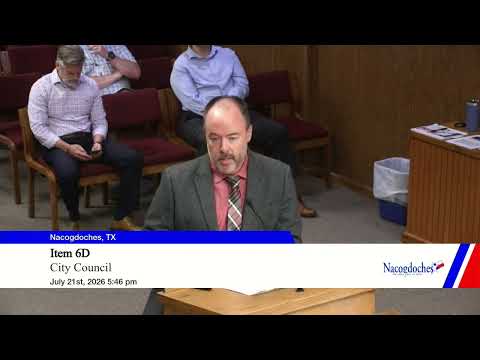
The council spent the second half of its July 21 meeting in an extended budget question-and-answer session where finance and public-works staff answered detailed questions about revenue, contested appraisal rolls, insurance reserves and capital planning. Todd Simono, finance director (speaker 15), reviewed the budget schedule and said staff recommended presenting the proposed budget at an Aug. 18 workshop, setting hearing dates, and delaying adoption to Sept. 15 to coincide with the tax-rate hearing.
Simono said the Central Appraisal District had more than 3,000 parcels contested and two mineral entities appealing about $280 million in value; staff cautioned the certified roll could shift materially if those protests are resolved. He told council the draft budget shows a roughly $1.9 million revenue increase driven by property-tax and sales-tax collections but noted uncertainty tied to CAD certification. Staff also explained an anticipated $1.2 million draw on insurance reserves and suggested increasing annual contributions by roughly 15% (about $560,000 across funds) to avoid reserve depletion.
Councilors debated CIP funding strategy, asking whether the city is borrowing (bonds) instead of cash-funding infrastructure. Staff said using bonds for large CIP projects is standard municipal practice to avoid depleting reserves and to spread costs over time, and reiterated charter rules requiring operating income to exceed operating expenses. Council asked staff to continue exploring grants and public-private partnerships and asked for more transparent ward-level detail about project distribution. The session included a series of departmental deep dives on police, fire, parks and airport budgets, and staff pledged follow-up materials and additional workshops.