Get Full Government Meeting Transcripts, Videos, & Alerts Forever!
Get email alerts on the School Finance Recapture topic
No spam. Unsubscribe anytime.
Midland ISD board unanimously authorizes suit challenging state school "recapture" funding
Summary
Trustees voted unanimously to authorize litigation arguing that Texas' school finance recapture/compression system improperly turns locally collected property tax into a de facto statewide property tax. Counsel described steps to "park" required payments while the case proceeds.
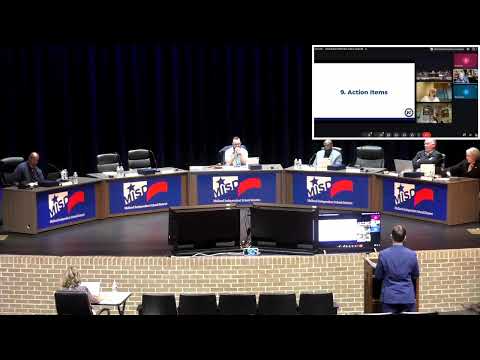
The Midland Independent School District Board of Trustees voted unanimously Tuesday to authorize litigation challenging the state's school finance recapture system, often called "Robin Hood," arguing it amounts to a state-controlled property tax in violation of Article 8, §1(e) of the Texas Constitution.
President Gwynn, who introduced the agenda item and led the discussion, said the board's concern is that the state-prescribed maximum compression and recapture calculations remove meaningful local control. "We as elected officials do not have the authority to set the tier 1 MNO tax rate for Midland ISD," he said during the presentation, arguing that the current system forces districts to levy at a state-determined level. Board members questioned legal exposure, costs and potential statewide consequences before voting to proceed.
Kevin O'Hanlon, outside counsel, described how the district would handle required recapture payments while the suit proceeds: "The state requires a recapture payment. We're going to talk and work out a place to park the money, and the recapture payment while we litigate this case," he said, explaining options such as a Rule 11 agreement with the attorney general or paying funds into the court registry so the district remains technically compliant while retaining the ability to recover funds if successful.
Trustees who spoke in favor highlighted local impacts: Dr. Friese said the board has a duty to test whether the system respects constitutional limitations and local control, calling the current arrangements "an unjust and unconstitutional tax." Trustees noted the estimated legal contingency (counsel estimated possible costs in the low seven figures depending on timeline) and discussed opportunities for other recapture districts to join and share expenses. The board moved and seconded the authorization and approved it unanimously.
Next steps: counsel will file the complaint in the appropriate court, continue discussions with the attorney general's office about where to hold recapture payments during litigation, and will provide the board with a budget and schedule for the work.