Get Full Government Meeting Transcripts, Videos, & Alerts Forever!
Get email alerts on the Prudence Island Access topic
No spam. Unsubscribe anytime.
Zoning board denies Prudence Island variance after residents question proposed paper‑road access
Summary
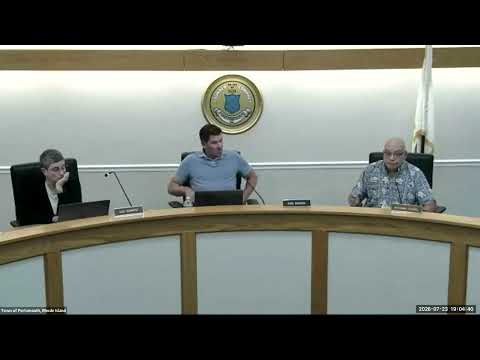
After extensive public comment and technical questions about wetlands, drainage and ownership of a historic "paper" road, the Portsmouth Zoning Board denied Alfred Souza’s application to build a dwelling accessed via a proposed private road on Prudence Island.
The Portsmouth Zoning Board of Review on Monday denied an application by Alfred Souza to build a dwelling on a lot that does not front a public street after neighbors and the board raised questions about road design, wetlands and who would be responsible for long‑term maintenance.
Attorney Matt Chapelle, representing Souza, told the board the applicant followed recommendations from the town’s technical review committee and proposed a 20‑foot compact gravel private way with engineered swales. "We will memorialize that so that there's no confusion when it does get to that point," Chapelle said, referring to deed restrictions and a maintenance covenant he said would be recorded. Chapelle requested a continuance when asked for full civil engineering drawings.
Neighbors and island residents urged the board to require stamped civil engineering plans and an independent environmental review before approval. "Cutting down a 100‑year‑old forest for 800 square feet of residence is hard to justify," said Derek Williams, who identified himself as a lifelong islander and urged the board to consider the topography and drainage impacts on nearby wells and Narragansett Avenue. Abutters also said engineers who initially visited the site withdrew after being harassed on the property.
Board members debated whether the zoning board had authority over access on a private "paper" street and whether the permit process for roads, wetlands determinations and other technical reviews should precede a zoning variance decision. One member noted the board had asked for civil engineering plans at a prior hearing and that those documents were not provided. After discussion, a motion to deny the application was made and seconded; the board voted to deny the variance.
The denial closes the application for now; Chapelle said his office will work with the applicant to determine an alternative approach to address the board's questions. Several residents asked the board to ensure any future submission include a professionally prepared civil engineering plan, clear documentation of which parcels own the right‑of‑way, and an independent environmental assessment for wetlands and drainage.