Get Full Government Meeting Transcripts, Videos, & Alerts Forever!
Get email alerts on the Historic Reenactment topic
No spam. Unsubscribe anytime.
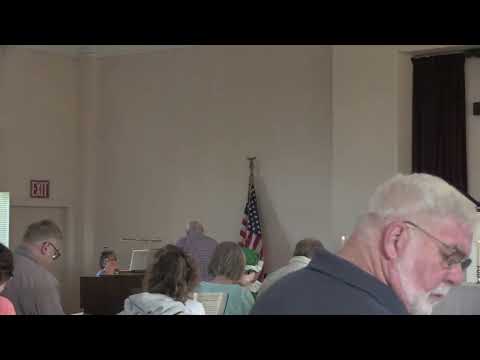
Townsend reenacts its 1776 town meeting and records a unanimous vote in 250th commemoration
Summary
At a 250th-anniversary event on the Common, Townsend presented a reenactment of its 1776 town meeting in which participants read a resolution instructing their representative to support independence; the staged vote was announced unanimous and included a proposal to raise funds for powder.
Townsend marked its 250th anniversary with a historical reenactment on the Common that recreated the town meeting of June 20, 1776, including a motion instructing the town's representative to express support for American independence and a proposed funding request for military supplies.
A participant reading the motion told the assembly the measure would "instruct Israel Hobart Esquire, representative for said town" to favor independence and asked that "the town raise —,500 to buy powder" (motion as read). The motion was moved and seconded on the floor, and the moderator put the question to voice vote; the moderator announced, "The ayes have it," and described the result as unanimous in the reenactment.
The staged debate included exchanged appeals to recent events of the 1770s: some voices argued for further accommodation with Britain, while others invoked the occupation of Boston and the April 19, 1775, violence as justification for separation. During the historical summary a program reader also recited the town record that "voted to raise 15 to buy powder and lead," and identified James Hosley as town clerk in that record.
The program did not reconcile the different amounts in the motion text (1,500) and the historical note that follows (—). The event presented both as part of the reenactment's readings rather than as a modern town decision.
After the reenactment the program continued with public celebration, music and acknowledgments to volunteers and donors.