Get Full Government Meeting Transcripts, Videos, & Alerts Forever!
Get email alerts on the Waste Management topic
No spam. Unsubscribe anytime.
Select Board debates transfer‑station Phase 2 scope and whether to accept construction waste
Summary
The board discussed rebuilding canopies, the cost of retaining two C&D dumpsters versus one, and whether the town should continue accepting commercial construction debris. Members asked staff for a financial analysis (weight vs. volume, subsidy estimates) and quotes; no policy change was adopted.
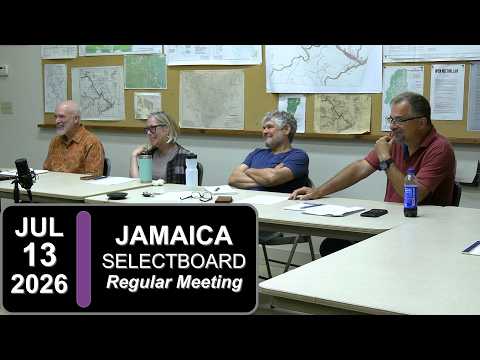
The Jamaica Select Board spent substantial meeting time on July 13 discussing Phase 2 of the town transfer station and whether to continue accepting commercial construction and demolition debris. The options considered included rebuilding damaged canopies and walls, retaining two collection bins versus a single bin, changing how the town charges for C&D (by weight versus volume), or ceasing to accept contractor loads at the town facility.
Several board members said the town is subsidizing C&D disposal and urged a firmer accounting of costs and alternatives. "There's a real disconnect: we're charging by volume but our cost is by weight," one board member said, urging staff to collect usage data and get vendor quotes. Another participant noted the risk that a contractor could dump heavy loads that impose large hauling and disposal costs; staff and members discussed options such as stair access for DIYers (to discourage contractor drop‑offs), higher fees for commercial loads, or sending mattresses and similar material to Wyndham Solid Waste as a lower‑cost option.
The board did not change policy on July 13. Instead it asked staff to (a) gather exact weight/volume and revenue data, (b) solicit quotes for alternative transfer‑station designs (one vs. two bins; with or without canopies), and (c) return with recommended pricing changes so the board can assess whether continuing to accept construction waste is financially sustainable. The board also discussed temporary repair offers and whether donor or contractor help would be acceptable while the wall is being redesigned as part of Phase 2 work.