Get Full Government Meeting Transcripts, Videos, & Alerts Forever!
Get email alerts on the Data Centers topic
No spam. Unsubscribe anytime.
County workshop frames data centers as local planning challenge; presenters flag water and energy demands
Summary
Presentations at a Columbia County informational workshop described how data centers operate and outlined state rules while residents raised concerns about groundwater, electricity demand, noise and long-term local benefits. Commissioners directed staff to research moratorium and LDR changes.
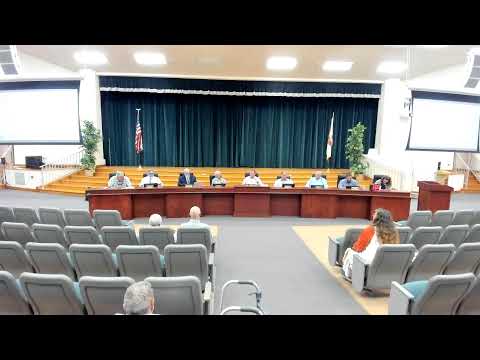
Columbia County officials convened an informational workshop on data centers where county staff and outside presenters described the facilities’ technical features and legislative background while residents urged caution.
Stosh Guntech, a county presenter, described data centers as “specialized facilities that store electronic equipment and … provide core services that compute power” and explained cooling options from air systems to closed-loop liquid designs. He reviewed Florida’s recent legislation, saying Senate Bill 484 now defines large data centers (roughly 50 megawatts or more) and places limits on water permits and certain utility practices.
Kimberly Dinkins of 1000 Friends of Florida told the board that energy and water use can be significant: “It takes about 1 megawatt of electricity to serve 1,000 people, so the demand of that 50 megawatt data center is equivalent to the demand of a city of at least 50,000 people.” She outlined local ordinance tools — setbacks, site-design rules, monitoring, decommissioning bonds and community-benefit agreements — that counties are using to manage impacts.
Residents supplied several localized concerns. Joseph Walker, a water-resources student and member of the 4 Rivers Audubon Society, cited Suwannee River Water Management District figures estimating an average data center could increase county water use by roughly 2.4% (about 110,000,000 gallons per year) and warned that local emergency services are not equipped for some on-site hazards. Other speakers raised potential effects on property values, continuous noise and diesel-generator emissions during outages.
Presenters and board members agreed the technology and regulatory landscape is evolving. The county’s staff said many technical questions — including the prevalence and effectiveness of closed-loop cooling systems and their indirect resource trade-offs — require project-specific review. County staff and legal advisors told commissioners that new local rules will be needed because “data centers are not even defined in our land development regulations,” and that adopting either an LDR amendment or a temporary moratorium would require a formal legal process.
The board did not take regulatory action at the workshop, but multiple commissioners said they would pursue more study and return with options for a moratorium and LDR amendments. Staff said they will research moratorium language and other rule changes and report back to the board at a future meeting.