Get Full Government Meeting Transcripts, Videos, & Alerts Forever!
Get email alerts on the Transportation Penny Tax topic
No spam. Unsubscribe anytime.
Greenville County Council approves transportation sales-and-use tax ordinance, sends referendum to voters
Summary
After hours of amendments and debate, Greenville County Council approved a transportation sales-and-use tax ordinance at third reading and will submit the measure to voters; the ordinance was amended to change administration and project allocation rules and passed on an 8–3 roll call.
Greenville County Council on July 12 adopted a transportation sales-and-use tax ordinance to be decided by countywide referendum this fall, after approving multiple amendments that changed how municipalities would receive and submit projects for their pro rata shares.
Council debate centered on allocation and oversight. Councilor McGahee and others argued the amendments clarify administration and compliance with state law; an amendment adding a Transportation Transparency Committee and naming the county auditor as an ex officio member also passed. After final votes, the ordinance passed on third reading by roll call, 8 in favor and 3 opposed.
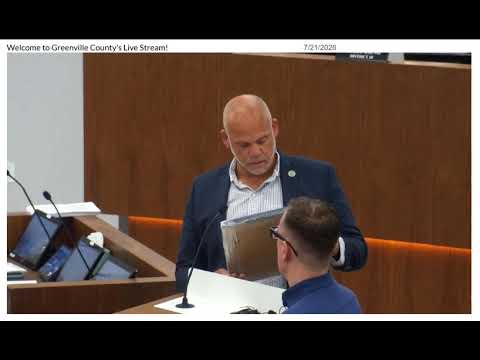
Supporters pointed to the ordinance's potential to fund long-deferred road and transit projects. William Forsyth, a Greenlink board member appointed by council, said the amendment to increase transit's share would have practical effects: “At 5%, as in the amendment, Greenlink can begin expanding in 2029 and phase in additional improvements through 2031,” Forsyth said, adding that a 5% share equates to roughly $2,750,000 annually for Greenlink under current projections.
Opponents warned the reallocation reduces the portion for roads. Diane Vreeland, speaking during appearances on the ordinance, asked council, “What is the reasoning behind raising the percentage from 3 to 5% for dollars expended for mass transit?”—a line of questioning echoed during the council floor debate.
Council also clarified procedural rules for municipal allocations so that DOR-collected funds are allocated through the county and municipalities submit projects for county approval. That change, proponents said, preserves county oversight of a county-administered tax while creating a process for municipal project proposals.
Next steps: The ordinance (as amended) will appear on the ballot if the board of elections and voter registration schedules the referendum; council created oversight and transparency provisions intended to make annual project lists and oversight public after implementation.