Get Full Government Meeting Transcripts, Videos, & Alerts Forever!
Get email alerts on the Assessment Results topic
No spam. Unsubscribe anytime.
WESD says districtwide proficiency held near 30% as some cohorts show gains
Summary
Washington Elementary School District staff told the governing board that overall AASA proficiency remained near 30% in 2025–26, with notable cohort gains in 4th grade and 70% of eighth-graders who took the optional civics test passing. Presenters emphasized curriculum adoption and targeted interventions as drivers of growth.
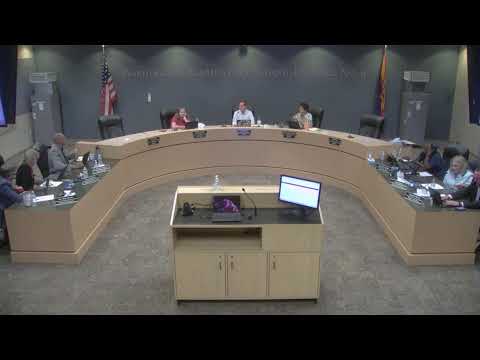
Washington Elementary School District leaders presented a summary of 2025–26 district and state assessment results at the July 23 governing board meeting, reporting that overall percent proficient on AASA ELA and math remained roughly unchanged districtwide but that specific cohorts and subgroups showed measurable gains.
Dr. Carrie Jevonnen, the district’s Director of Assessment and Evaluation, told the board that “proficient and above adds up to 30 as it did last year,” and walked members through disaggregated results by grade and subgroup. She said the district tests roughly 13,000 students in grades 3–8 and highlighted that 1,782 eighth-graders opted to take the civics test and about 1,200 passed — “70 percent passed it,” she said — meaning many students will not need to take the test again in high school.
Staff and board members discussed the drivers behind grade-level changes. Presenters cited recent curriculum adoptions (StudySync for secondary ELA), stronger targeted intervention models and small-group instruction at the middle-school level. “If our students hit their stretch growth target three years in a row…91% of that group was proficient by the end of the third year,” Dr. Jevonnen said, describing how I-Ready’s stretch-growth predictors relate to eventual AASA outcomes.
Board members pressed on test design and scoring. The presentation team explained that initial cut scores for a new state assessment are set after the ADE convenes national experts and runs item-response analyses; staff said that process explains delays in first-year results and that cut scores can be adjusted after technical review.
The presentation also covered science results and district benchmarks: WESD’s district science benchmark averaged about 57% correct across grades 3–8, while the state AZ-PSI science passing rate at tested grades (5 and 8) was reported near 28% for this administration. Presenters flagged subgroup highlights, including strong performance among recently reclassified fluent-English-proficient students and consistent growth among special education students in several content areas.
The district made the slide materials and detailed PDF data available in the meeting packet for members of the public who want to review the disaggregated tables and cohort charts. The board had no formal action on the assessment results; staff said they will continue to analyze trends and present findings at future meetings.