Get Full Government Meeting Transcripts, Videos, & Alerts Forever!
Get email alerts on the Finance Levy topic
No spam. Unsubscribe anytime.
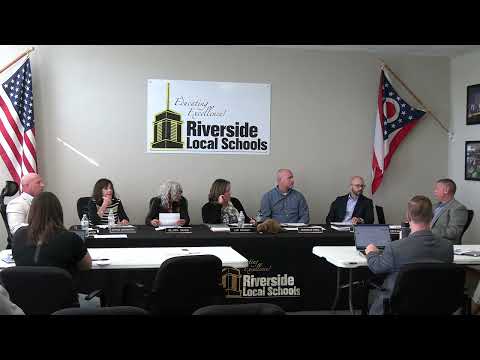
Treasurer warns House Bill 9 20 has frozen revenue; board briefed on 1% earned‑income levy to cover projected shortfalls
Summary
The district treasurer presented a multi‑year forecast showing falling state support and tightened local revenue because of "House bill 9 20," describing a proposal for a 1% earned‑income levy split roughly 60% operations and 40% facilities to close an anticipated multimillion‑dollar gap.
The Riverside Local School District treasurer told the board the district faces a structural funding squeeze and presented a five‑year forecast tied to state policy and local revenue limits. "House bill 9 20 freezes our revenue year over year over year," the treasurer said, explaining why projected state share has fallen from 38.4% to roughly 32.2 and why the district's reserves are being drawn down.
The treasurer laid out scenarios showing deficits rising into the millions if revenue growth remains capped. He said the district is proposing a 1% earned‑income tax on wages and self‑employment income, not on retirement income, with an estimated allocation of about 60% to operations and 40% to facilities and COPS debt service. "We're projecting that we will be somewhere around 4 the lower $4,000,000 in deficit spending next year," he said while urging the board to consider modeled outcomes for levy passage and failure.
Administration and board members discussed the levy design and the operational tradeoffs it would address. The treasurer also described potential one‑time offsets — insurance recoveries for damaged vans and bond interest accounting — that could modestly improve the forecast but would not eliminate ongoing shortfalls. The board was scheduled to receive a more detailed forecast and scenario modeling at August planning meetings to inform any ballot decision.