Get Full Government Meeting Transcripts, Videos, & Alerts Forever!
Get email alerts on the Regional Planning topic
No spam. Unsubscribe anytime.
SRTC outlines regional bicycle priorities and how local projects win federal grants
Summary
Spokane Regional Transportation Council detailed how federal programs (STBG, STBG set‑aside, CMAQ) and the Horizon 2050 plan guide a regional bike-priority network and fund local phases of larger projects such as the Fish Lake Trail connection and Division Street active-transportation improvements.
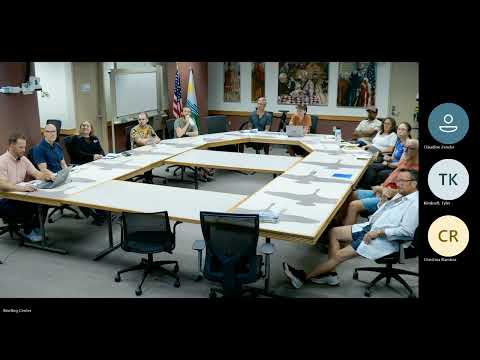
Jason Lian of the Spokane Regional Transportation Council told the Bicycle Advisory Board that SRTC serves as the region’s metropolitan planning organization and regional transportation planning organization, coordinating local priorities and federal funds for multimodal projects.
"A certain amount of federal funding is distributed to our region that funnels through SRTC," Lian said, noting the call-for-projects process funds local jurisdictions to design and build phases of larger projects. He listed recent awards that included Division Street active transportation improvements, US-2 multimodal enhancements and the Fish Lake Trail connection.
Lian described the scoring process that prioritizes projects consistent with SRTC’s guiding principles—quality of life, multimodal access and safety—and explained that Surface Transportation Block Grant (STBG) funds, an STBG set-aside for non-driving capital, and the Congestion Mitigation and Air Quality (CMAQ) program are the typical sources used for active-transportation projects. "SRTC funding typically often doesn't fund the entire project, but will help fund a phase of it," he said.
Why it matters: the regional unified list and Horizon 2050 long-range plan form the basis for project visibility and grant competitiveness; projects chosen for SRTC awards are more likely to attract additional local or state matches that complete design and construction.
Board members asked how regional priorities incorporate local plans and whether proposed connectors are simply aspirational. Lian said the regional bicycle priority network incorporates local planning work—city priority networks and county master plans—and that many horizon projects remain planning-level until funding is identified.
Looking ahead, Lian cautioned the board that the Bipartisan Infrastructure Law funding authority was scheduled to expire in September and that reauthorization could change funding levels for active transportation. "It's probably fair to say that it will be less generous for active transportation," he said, urging members to track federal developments that affect local grant opportunities.
The board said it appreciated the briefing and noted local staff will continue coordinating with SRTC on candidate projects and project pages that show construction phases, bids and schedules.