Get Full Government Meeting Transcripts, Videos, & Alerts Forever!
Get email alerts on the Ethics Safe Harbor topic
No spam. Unsubscribe anytime.
Court considers 'safe harbor' defense for Clarksburg council members in ethics appeal
Summary
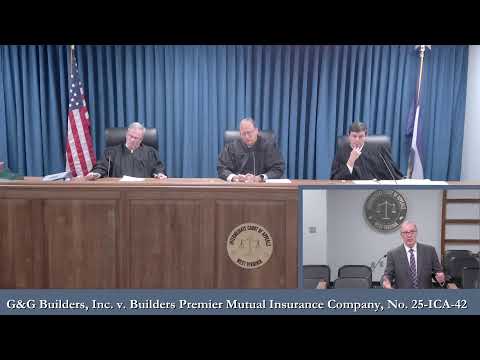
The appeals panel heard whether two Clarksburg officials who voted on a charter amendment can use advice-of-counsel as a defense or mitigation under West Virginia ethics law. Petitioners' counsel urged the court to adopt a safe‑harbor rule; the Ethics Commission's attorney said existing precedent treats reliance on counsel as mitigation, not an absolute defense.
Attorneys for Lily Junkins and James Marino argued that the court should recognize a safe-harbor for local officials who relied in good faith on advice of their city attorney when voting on a charter amendment that affected election timing. "If the ethics commission's decision is upheld, what are we going to tell future council members? You can't listen to your city attorney," petitioners' counsel Ed Rola told the panel, urging protections for officials who seek and reasonably rely upon counsel advice.
John Rausch, representing the West Virginia Ethics Commission, replied that the administrative law judge found no evidence of advice of counsel before the 2021 votes that are central to the complaints. Rausch cautioned that West Virginia case law does not recognize reliance on counsel as an absolute defense in ethics prosecutions, and said reliance may mitigate penalties but not necessarily bar a finding of a violation. The judges queried parties about the applicability of the subsection of the ethics statute that forbids voting on matters in which an official has a financial interest, and about the factual record showing whether a city attorney advised the council before the 2021 votes. The matter was submitted after argument.