Get Full Government Meeting Transcripts, Videos, & Alerts Forever!
Get email alerts on the Separation Ordinance topic
No spam. Unsubscribe anytime.
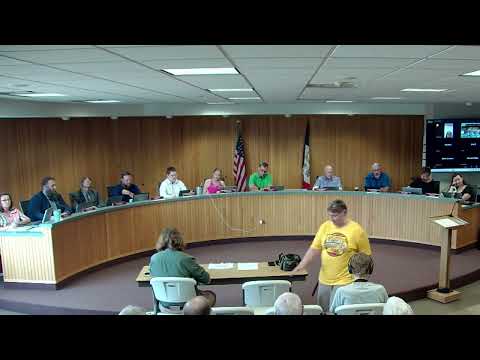
Council rejects first reading of local separation ordinance after heated public comment
Summary
After hours of public testimony and council debate, a motion to pass a first reading of a proposed separation ordinance that would limit local cooperation with federal immigration enforcement failed on a 0‑7 roll call. Council members cited state law conflicts and funding risks.
A motion to pass the first reading of a proposed local separation ordinance failed after a lengthy public hearing and council debate.
Supporters including Joshua Ratel Khan and Rachel Button urged the council to adopt the ordinance to shield immigrants from federal enforcement. "When a city passes an ordinance like this ... it sends a message to every immigrant family in Decorah that this community has their back," said Joshua Ratel Khan, a member of Decorah Community for Immigrant Rights. Rachel Button told the council that "85% of ICE arrests in Iowa come from local jails," framing the ordinance as a barrier to what she described as a "jail‑to‑deportation pipeline."
Council members who opposed the measure said the ordinance appeared to conflict with Iowa law and could put the city at risk of losing state funding. One council member said the city should not "knowingly place itself in violation of the law" and warned of the potential consequences of provoking litigation. Another council member emphasized working collaboratively with local law enforcement to strengthen procedures rather than passing an ordinance that might be unenforceable.
The motion to adopt the ordinance on first reading was moved by Bergen and seconded by Neil; roll call produced seven "No" votes and the motion failed. Following the vote, council members said the discussion had highlighted broader policy and home‑rule issues that might be addressed through other channels, including advocacy at the state and federal level or non‑litigious local policy changes. The Human Rights Commission had recommended the ordinance and dozens of residents spoke both for and against it during the public comment period.
Next steps: council did not adopt the ordinance and no vote was scheduled; members suggested continued community engagement and alternative strategies to support immigrant residents.