Get Full Government Meeting Transcripts, Videos, & Alerts Forever!
Get email alerts on the Mandatory Reporting topic
No spam. Unsubscribe anytime.
Board receives mandatory‑reporter training after SB 415 added school board members
Summary
At a premeeting work session the board and student representatives received mandatory‑reporter training from OSBA attorneys explaining that Senate Bill 415 (effective 1/1/2020) added school board members to Oregon's list of mandatory reporters and outlining when and how to report suspected child abuse.
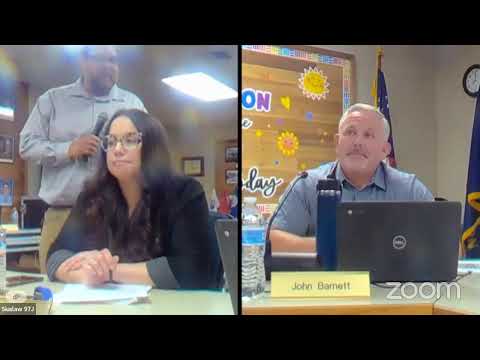
Spencer Lewis of the Oregon School Boards Association opened a mandatory‑reporter training for board members and other attendees, saying the annual session was intended to ensure board members understand their legal responsibilities. "I'm Spencer Lewis, one of the attorneys here at the Oregon School Boards Association," he said as he introduced the training and the presenters.
Lewis and a colleague reviewed the key change made by Senate Bill 415, which took effect Jan. 1, 2020: "It just adds a member of a school district board or public charter school governing body to the list of mandatory reporters," Lewis said. The presenters explained that being a mandatory reporter means a board member who has reasonable cause to believe that abuse has occurred and who has contact with the child or the alleged abuser has an immediate obligation to report to law enforcement or the Oregon Department of Human Services (DHS).
The training summarized the legal definition of child abuse used in reporting (including physical assault, mental injury, sexual exploitation and negligent treatment), noted that a ‘‘child’’ is an unmarried person under 18, and explained that some conduct between staff or volunteers and students remains prohibited and reportable even after graduation in limited circumstances. Trainers advised that oral reports to DHS or police satisfy the duty to report but recommended documenting for one’s records that a report was made.
Using concrete examples, presenters walked board members through several scenarios — a staff/student relationship reported in an investigative file, a consensual relationship involving an 18‑year‑old and a 17‑year‑old, observing an assault while off‑duty, and suspected neglect such as children lacking food at home — and explained how the statutory contact and reasonable‑cause rules apply. They emphasized resources available to board members, including DHS guidance, Safe Schools, OSBA handouts and OSBA legal advice (pacelegal@osba.org).
The session closed with an invitation to follow up: trainers encouraged board members to err on the side of reporting when uncertain and offered free trainings and direct legal advice to districts. The board then adjourned the work session and called the regular meeting to order.