Get Full Government Meeting Transcripts, Videos, & Alerts Forever!
Get email alerts on the Large Load Grid topic
No spam. Unsubscribe anytime.
Dunn Energy outlines how rural grid handles 'large loads' and what that means for data centers
Summary
Dunn Energy Cooperative told the county committee that most modular data-center proposals (2–3 MW) are manageable on local substations but larger projects require transmission upgrades; the co-op recommended zoning focus on land-use controls and asked the county to plan options rather than bar new technologies outright.
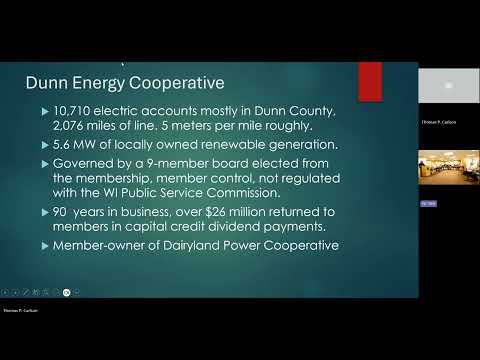
Jesse Singerhaus, general manager of Dunn Energy Cooperative, briefed the Planning, Resources & Development Committee on how the local distribution system interfaces with the regional grid and what large electrical loads mean for rates and reliability. "For us, our largest load is 4 megawatts on the system," Singerhaus said, adding that anything over a megawatt is "big" for the co-op and that individual rural substations could, on paper, add up to roughly 27 MW each before requiring major transmission upgrades.
Singerhaus explained the difference between capacity (instantaneous megawatts) and energy (kilowatt-hours over time), used local irrigation and ethanol-plant examples to show why utilities design to meet peak demand, and described MISO's regional role in setting wholesale prices. He urged the committee to consider zoning rules that focus on acreage, setbacks and noise rather than strict megawatt thresholds so the county can respond to unknown future technologies. Committee members asked about interconnection costs, wastewater and noise mitigation; Singerhaus said new members typically pay upgrade costs and that specialized rates and demand management can prevent cost-shifting to existing members.
The presentation provided technical context rather than a staff recommendation; the committee later asked staff to draft policy options for discussion and return them in a future meeting.