Get Full Government Meeting Transcripts, Videos, & Alerts Forever!
Get email alerts on the Zoning Ordinance topic
No spam. Unsubscribe anytime.
Board of Zoning Appeals and some business owners back home‑occupation changes; opponents urge flexibility on a proposed three‑client cap
Summary
A proposed amendment to Greenville County's home‑occupation rules (CZ2026‑039) would add small‑scale urban farming and artists to allowed uses, allow some detached accessory use in rural parcels, and suggest a three‑client cap; the BZA chair backed the change while practitioners asked for flexibility and case‑by‑case review.
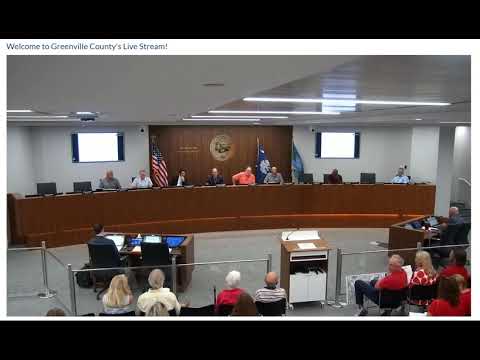
Greenville County staff and the Board of Zoning Appeals presented a proposed amendment to home‑occupation rules intended to modernize language and add commonly requested uses. The package would add small‑scale urban farming, artists, massage therapy and real‑estate professionals to allowable home occupations, allow some limited use of detached accessory structures for rural properties, and set site‑level caps on nonresident clients (a proposed default of three people on‑site at a time, excluding day care).
Michael Roth, chair of the Greenville County Board of Zoning Appeals, told council the changes resolve ambiguous drafting and make the ordinance easier to administer. "When the ordinance is clear and intention internally consistent, residents get predictable answers, and staff can administer the ordinance evenly," Roth said.
Several practitioners urged more flexibility. Artist and home‑occupation permit holder Hannah Litzinger said a rigid three‑client cap would harm small arts‑education programs and youth enrichment on larger rural parcels, and urged the county to evaluate capacity by property size and parking rather than impose a blanket numeric cap. Staff and BZA members noted that variance and special‑exception routes to the Board of Zoning Appeals remain available if applicants require more than the default cap.
Council members and staff discussed language around "nuisance" and enforcement and asked staff to consider clearer definitions or references to noise and property‑maintenance codes. Staff said the amendment was intended as a drafting cleanup informed by recurring BZA cases; the docket will be considered again at subsequent meetings and a courtesy public hearing was scheduled for zoning docket CZ2026‑040.