Get Full Government Meeting Transcripts, Videos, & Alerts Forever!
Get email alerts on the Economic Development topic
No spam. Unsubscribe anytime.
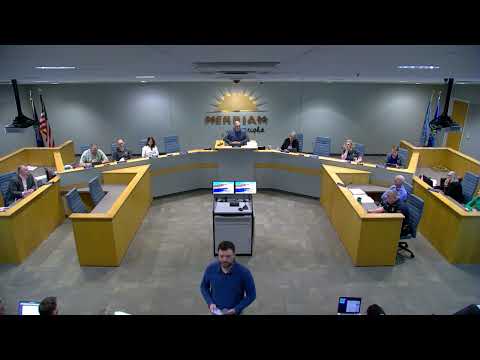
Council approves resolution of intent for $55.9 million residential tax abatement at Merriam Grand
Summary
After a public hearing and a cost‑benefit presentation, the council voted 7‑0 to approve a resolution of intent for industrial revenue bonds (IRBs) covering up to $55.9 million for the residential portion of the Serrano Merriam Grand Station Marketplace, drawing public criticism over potential conflicts and the distribution of benefits.
The Merriam City Council voted 7‑0 to approve a resolution of intent authorizing industrial revenue bonds with a principal cap of $55,900,000 for the residential component of the Serrano Merriam Grand Station Marketplace.
City staff opened a statutorily required public hearing on the proposed IRB. Staff described the IRB’s intended benefits: a 10‑year property‑tax abatement for the residential portion and a sales‑tax exemption on construction materials. Staff emphasized that the city bears no obligation for principal or interest on the bonds and that the resolution only sets an upper limit; an ordinance to issue bonds would come later if the project proceeds.
Jeff White of Columbia Capital summarized the cost‑benefit analysis required under Kansas law, saying the analysis measures first‑order direct impacts and uses average rather than marginal cost assumptions. “The property‑tax abatement here does show net positive present value benefit for each of the taxing entities,” he said, while also noting the state shows a large negative figure in the model because of how sales‑tax exemptions flow to state revenues.
At the public hearing, resident Billy Crown urged the council to reject the IRB, raising conflict‑of‑interest concerns about advisory firms and describing tax abatements as “corporate welfare.” Crown asked whether neighbors would receive any direct tax relief and criticized past city legal actions he associated with the city attorney. Council members heard the comments, closed the hearing and proceeded to a motion.
Councilmember Nevada moved to approve the resolution of intent; the motion was seconded and the clerk recorded a 7‑0 vote in favor. The resolution sets the maximum parametric amount and permits staff to continue negotiations and return with the formal bond ordinance if the developer seeks to proceed.
Next steps identified by staff include continued negotiation, final cost and financing documentation and returning to the council for a bond‑issuance ordinance later in the project timeline.