Get Full Government Meeting Transcripts, Videos, & Alerts Forever!
Get email alerts on the Public Health Governance topic
No spam. Unsubscribe anytime.
Local training reviews county board’s public‑health powers and responsibilities
Summary
Burke County commissioners received required training on local public health governance, including mandated vs. essential services, accreditation duties, and the board’s authority to adopt local public health rules and adjudicate enforcement matters.
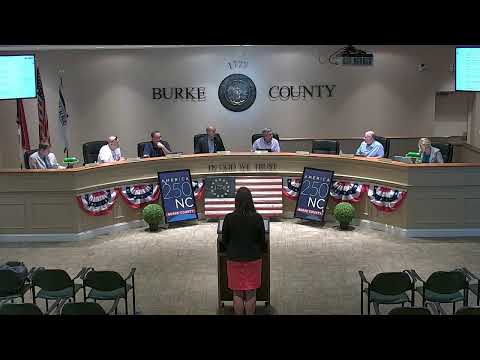
The Burke County Board of Commissioners met as the Board of Health on July 27, 2026, for the required annual training on local public health governance. Ashley Garrett of Burke County Public Health presented the session, outlining the board’s role in oversight, rulemaking, and ensuring the availability of essential public health services.
Garrett explained the difference between mandated services—those required by North Carolina law—and essential services, which reflect best practices used for accreditation. “So the core function of public health is to prevent infectious diseases,” Garrett said, describing examples such as communicable disease control, environmental health, and vital records. She told commissioners that mandated services form a statutory minimum while essential services often require partnerships or additional capacity.
During Q&A commissioners pressed for clarity about enforcement and scope. Garrett said enforcement authority typically rests with the state and noted that accreditation standards recently changed, reducing prescribed standards from a larger set to a smaller, more focused list. She urged the board to use community health assessments and advisory committees to set priorities and monitor departmental performance.
The board voted 4–0 to acknowledge receipt of the training and the accompanying handbook as required by state administrative rules. The training materials and discussion emphasize the board’s statutory duties, the limits of local enforcement, and the practical options for delivering services through partnerships and the health director’s office.