Get Full Government Meeting Transcripts, Videos, & Alerts Forever!
Get email alerts on the LCAP topic
No spam. Unsubscribe anytime.
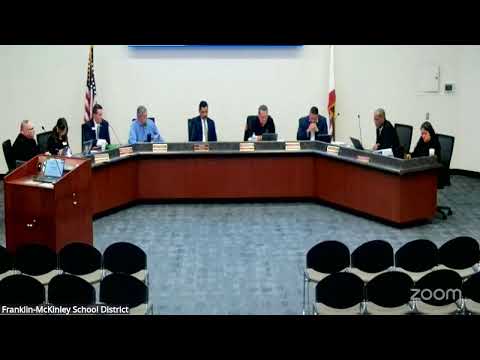
LCAP hearing: Franklin‑McKinley highlights engagement gains, adds metrics and site‑level clarifications
Summary
At a public hearing on the Local Control and Accountability Plan, Assistant Superintendent Dr. Trujillo reviewed the 2025–26 LCAP update: three stable goals, merged actions, added literacy metrics (DIBELS), and increased focus on disaggregated monitoring for groups such as African American and homeless students. Staff reported higher survey participation and will continue outreach.
The board held a public hearing on the Franklin‑McKinley School Districts 2025–26 Local Control and Accountability Plan (LCAP). Assistant Superintendent Dr. Trujillo presented the update, saying the district kept the three core LCAP goals (achievement for all, supporting the whole child, and strategic partnerships) and reorganized several actions to reduce duplication.
Dr. Trujillo emphasized increased engagement during the drafting process: student surveys rose to more than 1,800 respondents and parent/staff survey responses grew from 292 last year to 701 this year. He said staff intend to continue soliciting feedback through the District Advisory Council, expanded surveys, family resource centers and school site activity.
Staff added the DIBELS early literacy assessment as an LCAP metric for K–3 reading and will monitor subgroups more frequently, including students identified as African American and students experiencing homelessness. Dr. Trujillo noted the district included additional staffing in some actions, increasing funding for goal‑related activities; he also acknowledged that one‑time funds used previously (for social workers and other supports) are no longer available and that some goal funding was reduced accordingly.
Board members asked how district staff will track subgroup outcomes in near real time. Dr. Trujillo said the district uses local assessments and a data system (DataZone) that will allow disaggregation and plans to implement six‑week intervention cycles to monitor progress. Board Member Hong praised the outreach and urged authentic engagement rather than "checking the box."
The district will consider the LCAP for approval at the next board meeting on June 24 after incorporating any additional community feedback.