Get Full Government Meeting Transcripts, Videos, & Alerts Forever!
Get email alerts on the Community Survey topic
No spam. Unsubscribe anytime.
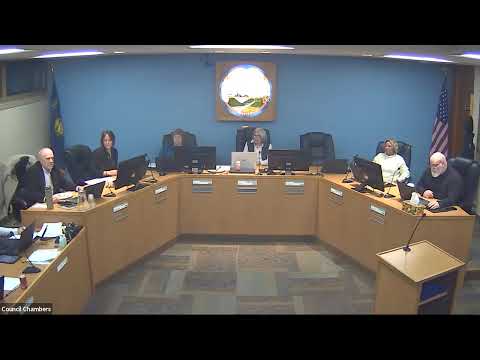
Sandy staff present community survey plan to council; debate centers on length, incentives and reach
Summary
Greg, completing a master's capstone, presented a proposed community survey adapted for Sandy to help benchmark city goals. Councilors debated questionnaire length, conditional routing, demographic questions, and outreach tools including a modest paid social push and a raffle incentive.
Greg, a staff presenter finishing a master's capstone, told the Sandy City Council the proposed community survey would collect baseline data on community image, service usage and satisfaction to guide future council goals. "This is a first for me. I've never done a workshop, and I've never done a community survey," he said, explaining he had worked with department heads to draft questions tailored to Sandy while keeping some items comparable to other cities.
Councilors pressed on design trade-offs. Several urged shorter modules to increase completion, suggesting 10–12 questions per wave rather than one long instrument; one councilor recommended splitting topics so respondents could opt in to sections they care about. Greg recommended conditional logic so respondents who do not use a service are not asked irrelevant questions. Tyler, the city manager, summarized likely logistics: an online survey with paper copies available by request, bill inserts and QR codes, and modest paid social advertising targeted by ZIP code or a limited radius.
The group discussed incentives and response control. Tyler and others suggested a raffle entry (a $50 prize was discussed) as a low-cost incentive to boost participation. Council members emphasized clear time-to-complete estimates and progress indicators to reduce drop-off. On demographics, members asked for basic fields (age categories, housing type, years in Sandy) and a lightweight location field (map or zone selection) so results can be filtered by area without compromising anonymity.
Greg said he would provide a detailed analysis 'cookbook' with raw counts, response rates and the statistical approach for comparing subgroups; he proposed a minimum four-week open period for responses with the ability to extend if participation is low. He told council he is working backward from an academic deadline and aims to present results in late winter. The council asked for comment on the draft questionnaire by December 31 so staff can finalize the instrument and proceed.