Get Full Government Meeting Transcripts, Videos, & Alerts Forever!
Get email alerts on the Ddr Bucket topic
No spam. Unsubscribe anytime.
NLR outlines damaged-battery (DDR) bucket and packing procedures
Summary
NLR described damaged/defective/recalled (DDR) battery buckets for swollen or leaking lithium batteries, advising bagging leaking cells, layering with thermal suppressant, spacing 1–2 inches between layers, and sealing the liner before scheduling pickup for certified processing.
Suzanne Nardi said that not all batteries are in perfect condition and described the DDR bucket approach for high-risk items such as e-bike and high-capacity tool batteries. Nardi listed warning signs—swelling or bulging, white crusty residue, and unusual discoloration or odor—and advised municipalities to bag leaking batteries and place them on thermal suppressant layers within the DDR bucket.
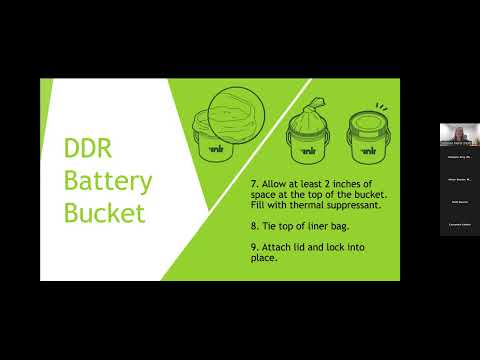
She described a layering procedure: place a 1–2 inch layer of thermal suppressant in the bottom of the bucket, place protected batteries about 1–2 inches apart, cover with additional thermal suppressant, and leave approximately 2 inches of headspace before sealing the liner and locking the lid. Nardi said full DDR buckets will be returned for certified processing and that the bucket includes instructions and a mailing label.