Get Full Government Meeting Transcripts, Videos, & Alerts Forever!
Get email alerts on the Santa Fe Homes Fee topic
No spam. Unsubscribe anytime.
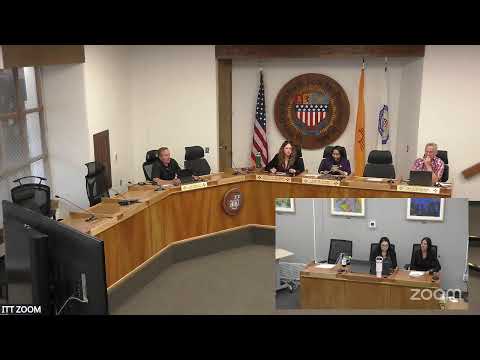
Finance committee forwards Santa Fe Homes fee change to governing body after debate
Summary
The committee advanced a bill to change how the fee-in-lieu for affordable rental units is calculated — switching the base from 65% AMI to 30% AMI — and scheduled the ordinance for governing-body consideration after discussion about payment timing and administrative impacts.
The Santa Fe Finance Committee voted to move an ordinance (Bill 2026-11) that would change the fee-in-lieu calculation in the Santa Fe Homes program from using 65% of area median income (AMI) to 30% AMI to the governing body for consideration. Director Fabiola Chavez of the Office of Affordable Housing told the committee the change is intended to better match fee calculations to lower-income rents and national comparisons.
"At the 30% AMI calculation the project fee for the example we analyzed is about $1,004,002.92," Director Chavez said, noting that even with the proposed change the fee levels remain below national averages and likely insufficient to replace a rental unit at realistic development costs. Chavez walked the committee through a sample 139-unit project (54 one-bedroom, 67 two-bedroom, 18 three-bedroom) and explained the current fee is computed as a gap between HUD fair-market rents and the affordable-unit set-aside.
Consultant Sherry Boucher, appearing remotely, compared Santa Fe's proposed fee with other communities and said cities that revised fees—such as Broomfield and Boulder—reported increased housing production and monitoring tools like dashboards. "Even the lowest comparison we saw, Broomfield, is higher than what we're proposing," Boucher said, arguing Santa Fe's proposed fee remains low relative to peer cities.
Committee members pressed administrators on implementation details, including whether developers could defer payment to the time of Certificate of Occupancy (C of O) and the administrative burden of tracking installment plans. Chavez said the city currently collects fees at permit issuance and that allowing payment plans would require additional invoicing and cashier-office work, though she signaled support for increased fees and said the department anticipates adding staffing to manage workloads.
Procedurally, the committee agreed to use governing-body rule 4.c.5 (lay on the table) to take up the bill at the governing-body meeting set for 2026-07-29 so that the full council can review simplified amendment language and the committee's recommendations. The committee did not finalize substantive text changes to the fee formula itself at the committee meeting; it forwarded the ordinance and associated amendment language for governing-body consideration.