Get Full Government Meeting Transcripts, Videos, & Alerts Forever!
Get email alerts on the Surveillance topic
No spam. Unsubscribe anytime.
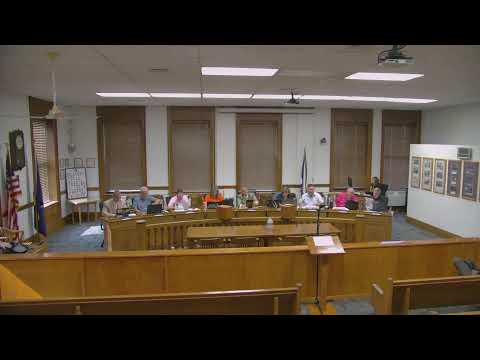
Resident and former officer urges Montcalm commissioners to reject Flock Safety-style surveillance
Summary
A local resident and former law enforcement officer warned the board that automated license-plate readers and similar systems create permanent searchable tracking data, raise constitutional and cybersecurity concerns, and can lock communities into long-term leased contracts; commissioners said municipal actions (e.g., Greenville) limit county control but agreed to look into county property restrictions.
Eric Sentrickstad, a local resident and former law enforcement officer, urged the Montcalm County Board of Commissioners to reject procurement or leasing of Flock Safety–style surveillance systems and asked the board to consider a county ordinance prohibiting automated mass surveillance on county property.
Sentrickstad said the systems build permanent, searchable visual profiles of ordinary traffic and that they operate as “networked AI powered cameras” whose data can be stored, searched, and shared. “These are not standard security cameras,” he said. “They’re tracking nodes designed to build a domestic dragnet.” He raised constitutional concerns, potential federal procurement and national-security risks tied to banned components, and the financial consequences of long-term leases that leave communities with cameras they do not own.
Commissioners acknowledged Greenville already has at least one camera and said municipalities can make their own procurement choices; several commissioners noted the county’s direct control is limited to county-owned property, such as parks. One commissioner summarized the jurisdictional constraint: the county can restrict systems on county property but not override municipal installations.
Sentrickstad recommended the county require locally owned, auditable systems if the county pursues any surveillance tools and advocated for transparency and contractual limits on data sharing. The board did not take immediate action but indicated members would research the issue further and consider options if a formal request arrives from the sheriff or another local agency.
Next steps: The board asked staff to gather more information and indicated it will review any future procurement requests with attention to legal, security, and budgetary risks.