Get Full Government Meeting Transcripts, Videos, & Alerts Forever!
Get email alerts on the Media Funding topic
No spam. Unsubscribe anytime.
Mount Hood cable commission warns declining cable fees threaten community-media grants
Summary
Consultants and commission staff told the Wood Village council that Multnomah County cable subscribership has fallen below 100,000, shrinking PEG and franchise-fee revenues and forcing the Mount Hood Cable Regulatory Commission to consider changes to its intergovernmental agreement and budget over the next 3–6 months.
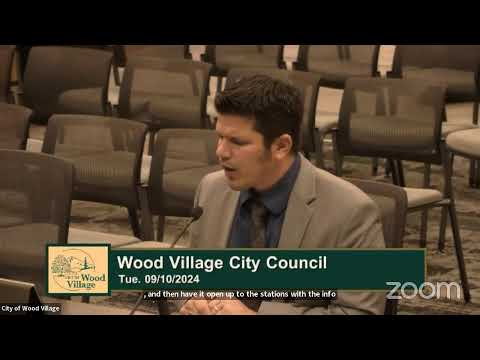
Consultants working with the Mount Hood Cable Regulatory Commission told the Wood Village City Council on Sept. 10 that long-term declines in traditional cable subscriptions are eroding the revenue that funds local community-media centers, prompting a strategic-planning effort and options for changing how the commission is structured.
"As of the most recent data...subscribers are now under 100,000 across the county," said Autumn Carter, a managing partner with Next Strategies, summarizing slides the commission distributed. Reid Wagner, a Next Strategies partner, said the commission’s three core functions — negotiating franchise agreements, managing PEG/franchise funding, and advocacy — remain important but are under pressure as subscriber-based revenues decline.
The presentation described how franchise and PEG fees are calculated as a percentage of cable TV gross revenues and how technology convergence (the same fiber carrying video and broadband) and industry consolidation have reduced competition and fee bases. "These reduced cable fees...threaten media center sustainability," Carter said, showing projections in which fee revenues and the commission’s operating budget converge in the next three to five years unless jurisdictions change contributions or the commission cuts costs.
Councilors pressed presenters on options and timing. The commission said staff and volunteer commissioners will develop scenarios over the next 3–6 months and return with specific recommendations, including whether to amend or replace the intergovernmental agreement and whether to pursue additional authority such as broadband oversight. Presenters cautioned federal preemption currently limits local regulation of broadband, and they emphasized tradeoffs: less funding for PEG operations and community grants if fees continue to decline.
John Luxton of Metro East Community Media described the role community media centers play in training, local production and live meeting coverage and warned that fewer PEG dollars would reduce community training and grant programs. Council members asked for clearer analyses of which services would be cut under different funding scenarios and for comparisons with other member jurisdictions.
The commission committed to bring back options, projected financial impacts, and member-jurisdiction positions to help each city decide whether to maintain the current volunteer-commission structure or pursue a different arrangement.