Get Full Government Meeting Transcripts, Videos, & Alerts Forever!
Get email alerts on the Mental Health Crisis Response topic
No spam. Unsubscribe anytime.
Regional 988 mobile crisis team outlines in‑person response and follow‑up services to Houston County commissioners
Summary
Presenters from the regional mobile crisis team described how 988 calls are screened to dispatch in‑person responders, the team's ability to co‑respond with police when necessary, and follow‑up stabilization visits paid through grant funding. Commissioners encouraged outreach at county events.
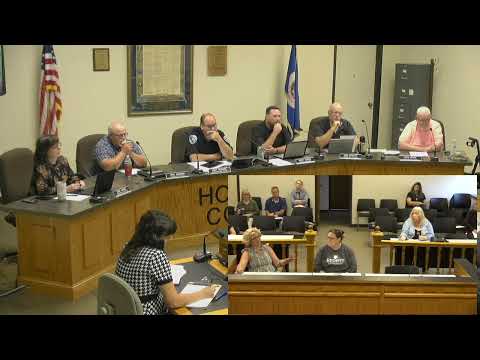
Representatives from the HVMHC mobile crisis team told the Houston County Board that 988 calls are routed through a hub and screened before an in‑person responder is dispatched to assess safety, connect callers to immediate resources and determine whether emergency care is needed. "When people call in, they get put to a hub or like a dispatch center ... and they get screened questions," said Whitney Vance, the daytime crisis responder for Houston County.
Clinical supervisor Robinson, who identified herself as employed by Hiawatha Valley, said the program is contracted by five counties — Fillmore, Houston, Winona, Waukesha and Goodhue — and that the teams provide both immediate crisis assessment and a limited set of follow‑up stabilization visits paid through grant funding. "We are contracted by 5 counties which would be Fillmore, Houston, Winona, Waukesha, Goodhue to provide mobile crisis team to actually go out in real time," Robinson said. Board members asked whether the team engages schools, fairs and other local events as part of outreach; presenters encouraged using the Houston County Fair and National Night Out to raise awareness.
The presenters said the mobile response can sometimes avoid hospitalization and reduce law‑enforcement involvement by offering on‑site safety planning and referrals. Commissioners and staff discussed ways to connect the teams with local schools and agricultural communities where access to mental‑health resources is limited. The board did not take formal action on the presentation; members thanked the presenters and suggested staff work with them to identify outreach opportunities.