Get Full Government Meeting Transcripts, Videos, & Alerts Forever!
Get email alerts on the Health It Ecosystem topic
No spam. Unsubscribe anytime.
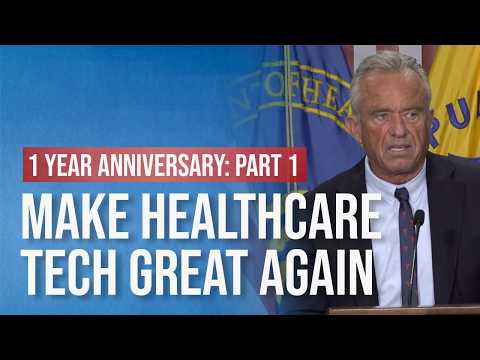
HHS, CMS leaders mark 1 year of health-tech 'kill the clipboard' push as patient access climbs to 60%
Summary
HHS and CMS leaders celebrated the health tech ecosystem's first anniversary, saying 60% of patients can now access records via apps, announcing new CMS product office and GA designations for networks, EHRs, providers, payers and apps.
HHS and CMS officials onstage at an anniversary event said the federal effort to foster nationwide health-data exchange has moved from pilot stages to routine production for many participants. Amy Gleason, deputy administrator and chief product officer for the newly formed Office of Health Technology and Products, said the program has grown from 60 organizations at launch to more than 800 in 12 months and that many apps and networks are now in general availability.
"The number I want you to remember, if you don't know it already, is 60 percent," Secretary Robert F. Kennedy Jr. (S2) said, citing the share of Americans who can now import their health records into an app of their choice, up from 5% a year earlier. Officials including CMS Administrator Dr. Mehmed Oz (S4) and ONC National Coordinator Tom Keane (S6) credited a mix of federal infrastructure (FHIR, USCDI v3, identity standards), industry crosswalks, and convening work for the boost.
The event combined recognition of organizations that achieved CMS 'general availability' (networks, EHR vendors, providers, payers, patient apps) with policy and operational announcements. Amy Gleason said CMS is publishing an EHR-by-EHR provider guide so front-desk staff know how to accept a patient's QR-coded 'smart health link.' Keane said ONC will align certification and information-blocking guidance with what the ecosystem demonstrates in practice.
The celebration also emphasized adoption hurdles. Chris Klomp (S3) and others said the technology is live but provider workflows must change to receive patient-shared data. "Infrastructure only delivers value when people use it," Klomp said, urging providers to update workflows and technical settings so QR-code transfers become routine. The agencies framed the next year as focused on adoption and payment pathways to support scalable clinical AI and digital tools.